
.jpeg)
Comparison of Midostaurin and Quizartinib: A Comprehensive Analysis of Efficacy and Safety
Midostaurin and Quizartinib (Quizartinib), two targeted therapeutic drugs targeting FLT3 mutations, are both used in acute myeloid In the treatment of leukemia (AML), especially for patients with FLT3 mutations (mainly FLT3-ITD type). Although their targets are similar, there are certain differences in molecular structure, pharmacological mechanism, indications, efficacy performance and safety, which are of important reference value for clinicians when formulating individualized treatment plans.
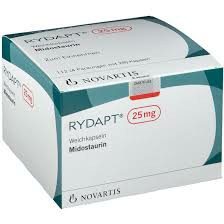
Midostaurin is the first targeted drug approved for the treatment of AML with FLT3 mutations. Its mechanism of action is a multi-target tyrosine kinase inhibitor. In addition to inhibiting FLT3 mutations, it can also act on multiple signaling pathways such as KIT, PDGFR, and VEGFR. Therefore, midostaurin has a wider therapeutic scope and is not limited to FLT3 mutations. It may also affect other related pathways, thus showing certain advantages in some patients with complex diseases. In clinical applications, midostaurin is often used in combination with standard chemotherapy, especially in adult patients with newly diagnosed FLT3-mutant AML. According to international clinical studies (such as the RATIFY study), midostaurin combined with chemotherapy can significantly improve the complete remission rate and prolong overall survival, with its five-year overall survival rate reaching more than 50%.
Quizatinib is a more selectiveFLT3 inhibitor, which has a strong inhibitory effect on FLT3-ITD mutation activity, but has a weak inhibitory effect on other tyrosine kinases. Therefore, it is more targeted and has relatively controllable side effects. Quizartinib is mainly used for patients with relapsed or refractory FLT3-ITD mutated AML. The indications are more precise and it is usually used for second-line or even third-line treatment. It may still be effective especially after midostaurin treatment fails. In clinical trials (such as the QuANTUM-R study), quizartinib has shown higher response rates and survival advantages than traditional treatments in relapsed/refractory patients. Especially for patients who cannot undergo hematopoietic stem cell transplantation, quizartinib provides a more effective treatment option to delay the progression of the disease.
In terms of safety, midostaurin may cause a wide range of adverse reactions due to its multi-target properties, such as nausea, vomiting, rash, increased risk of infection, prolongation of QT interval, etc. Some patients may also experience serious side effects such as abnormal liver function or neutropenia. However, it can usually be controlled through symptomatic treatment or dosage adjustment under the guidance of a doctor. Quizartinib requires special vigilance in terms of cardiotoxicity, especially the higher risk of QT interval prolongation and arrhythmia. Regular electrocardiogram monitoring is required during use. Common side effects such as fatigue, edema, diarrhea, and anorexia may also occur. Generally speaking, the adverse reactions of quizartinib are more concentrated in the cardiovascular system, but due to its high selectivity, gastrointestinal and systemic discomfort are relatively mild.
From the perspective of actual clinical use, midostaurin is more suitable for combined chemotherapy treatment at the newly diagnosed stage, emphasizing molecular targeted intervention in the early stages of the disease, thereby improving long-term survival rates. Quizartinib has shown superior targeting ability in late-line treatment, especially in relapsed and refractory patients, and has a high response rate especially in patients with FLT3-ITD who have failed previous treatments. In the future, treatment strategies for FLT3 mutations may show a trend of "staged, mutation type, and treatment line" development, and individualized treatment will be further optimized.
Reference materials:https://medlineplus.gov/druginfo/meds/a617033.html
[ 免责声明 ] 本页面内容来自公开渠道(如FDA官网、Drugs官网、原研药厂官网等),仅供持有医疗专业资质的人员用于医学药学研究参考,不构成任何治疗建议或药品推荐。所涉药品可能未在中国大陆获批上市,不适用于中国境内销售和使用。如需治疗,请咨询正规医疗机构。本站不提供药品销售或代购服务。


