
.jpeg)
Pitobrutinib/pitubrutinib targets are all known, and scientific medication use is guaranteed!
Pirtobrutinib is an innovative, highly selective, non-covalent Bruton tyrosine kinase (BTK) inhibitor that shows significant advantages in target specificity, ability to cope with drug-resistant mutations, and treatment of B-cell malignancies. BTK is a tyrosine kinase located in the cytoplasm, an important member of the Tec kinase family, and plays a key role in the B cell antigen receptor (BCR) signaling pathway. By mediating BCR signaling, BTK affects the survival, proliferation, differentiation and chemotaxis of B cells, and is a core molecule in maintaining B cell homeostasis. In many malignant tumors derived from B cells, such as chronic lymphocytic leukemia (CLL), mantle cell lymphoma (MCL), and Waldenstrom's macroglobulinemia (WM), the BTK pathway is often continuously activated, promoting the survival of malignant B cells and disease progression.
Currently on the marketBTK inhibitors, such as Ibrutinib, Acalabrutinib, etc., are mainly covalent inhibitors. They form a covalent bond with the Cys481 site of BTK, thereby blocking its kinase activity. Although these drugs have achieved clinical breakthroughs, as treatment progresses, more and more patients have developed Cys481 mutations, causing BTK to be resistant to covalent inhibitors. In addition, the inhibition of other kinases by covalent inhibitors may also cause off-target toxicity, such as bleeding, arrhythmia and other side effects, which limits their long-term use.
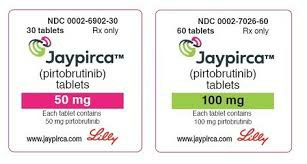
Pittobrutinib, as a non-covalent BTK inhibitor, was originally designed to overcome the drug resistance defects and insufficient selectivity of traditional covalent inhibitors. It binds to the active site of BTK with high affinity in a non-covalent manner, which is different from the mechanism that relies on covalent binding of Cys481. Therefore, it can still stably inhibit BTK activity when Cys481 is mutated (such as C481S, C481R). In non-clinical models, pitobrutinib is not only effective against wild-type BTK, but also has strong inhibitory potency against Cys481 mutant BTK, showing broad-spectrum anti-drug potential that is superior to traditional covalent inhibitors.
In addition, pitobrutinib has extremely high selectivity forBTK, which is more than 300 times higher than other kinases, exceeding 98%. This high degree of targeting means that it can effectively attack BTK-dependent malignant B cells without interfering with other unrelated kinase pathways. Non-clinical studies have shown that pitobrutinib can effectively block BTK-mediated downstream signaling pathways, such as PLCγ2, NF-κB and MAPK, and significantly inhibit the expression of B cell activation markers such as CD69, thereby reducing the proliferation and survival of malignant B cells.
In terms of pharmacokinetics, pitobrutinib exhibits good oral bioavailability and a moderate half-life, supporting a once-daily oral regimen. This not only simplifies the treatment process, but also helps improve patient medication compliance. More importantly, in early clinical trials, pitobrutinib showed a good response rate and durable efficacy in patients with drug-resistant or relapsed CLL and MCL. At the same time, the incidence of adverse reactions was low and the overall safety was good.
Reference materials:https://go.drugbank.com/drugs/DB17472
[ 免责声明 ] 本页面内容来自公开渠道(如FDA官网、Drugs官网、原研药厂官网等),仅供持有医疗专业资质的人员用于医学药学研究参考,不构成任何治疗建议或药品推荐。所涉药品可能未在中国大陆获批上市,不适用于中国境内销售和使用。如需治疗,请咨询正规医疗机构。本站不提供药品销售或代购服务。


