
.jpeg)
What are the functions and effects of pomalidomide capsules? What diseases can it treat?
Pomalidomide (Pomalidomide) is an immunomodulator that belongs to the "thalidomide drug" family. It belongs to the same class as thalidomide and lenalidomide, but its molecular structure has been optimized to retain anti-tumor activity while having relatively more controllable side effects. It is an oral capsule preparation mainly suitable for the treatment of patients with multiple myeloma, especially for refractory or relapsed patients whose disease has progressed after previous treatment with lenalidomide and proteasome inhibitors (such as bortezomib).
From the perspective of mechanism of action, pomalidomide has multiple anti-tumor mechanisms. First, it can enhance the activity of T cells and natural killer (NK) cells, thereby improving the immune system's ability to recognize and eliminate tumor cells; secondly, it can inhibit the secretion of inflammatory factors and growth-promoting factors in the tumor cell microenvironment, thereby interfering with the living environment of tumor cells; in addition, pomalidomide can also directly inhibit the proliferation of tumor cells and induce their apoptosis. These comprehensive mechanisms enable it to play an important role in controlling disease progression and delaying recurrence.
Currently, pomalidomide is widely used to treat relapsed or refractory multiple myeloma (RRMM). According to international guidelines, this drug is often used in combination with dexamethasone, and can also be combined with other drugs (such as daratumumab, ixazomib, etc.) to improve the efficacy. For patients who are ineffective on lenalidomide treatment, pomalidomide is often used as an alternative to further extend the patient's progression-free survival (PFS) and overall survival (OS). Its efficacy has been confirmed by multiple large-scale clinical trials, especially in patients who still have a chance of treatment after multiple lines of treatment.
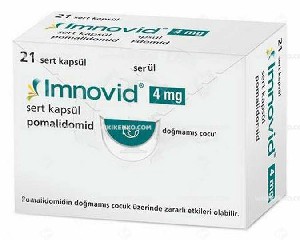
It is worth noting that pomalidomide may also be studied for the treatment of other hematological diseases or solid tumors related to immune abnormalities, and it is still in the clinical research stage. Although the main indication is still multiple myeloma, its pharmacological properties show certain broad-spectrum anti-tumor potential. In addition, pomalidomide, like thalidomide and lenalidomide, is highly teratogenic to pregnancy, so female patients must strictly use contraception during treatment, and male patients also need to avoid getting their partners pregnant while taking the drug.
Pomalidomide also has certain adverse reactions during use. Common side effects include anemia, neutropenia, thrombocytopenia, fatigue, lung infection, gastrointestinal discomfort, rash, etc. In particular, hematological toxicity is more prominent, so patients need to regularly monitor blood routine, adjust the dose according to the actual situation, and suspend or terminate treatment if necessary. At the same time, in order to reduce the risk of venous thrombosis, many patients need to take anticoagulant drugs while taking pomalidomide.
In summary, pomalidomide capsule is a highly effective immunomodulatory anti-tumor drug, especially suitable for the treatment of relapsed or refractory multiple myeloma. Through multiple mechanisms such as regulating immunity, suppressing the microenvironment, and directly inducing tumor cell apoptosis, it provides important clinical treatment options. With the deepening of research, pomalidomide may play a role in more blood diseases or malignant tumors in the future, further expanding its clinical application prospects.
Reference materials:https://en.wikipedia.org/wiki/Pomalidomide
[ 免责声明 ] 本页面内容来自公开渠道(如FDA官网、Drugs官网、原研药厂官网等),仅供持有医疗专业资质的人员用于医学药学研究参考,不构成任何治疗建议或药品推荐。所涉药品可能未在中国大陆获批上市,不适用于中国境内销售和使用。如需治疗,请咨询正规医疗机构。本站不提供药品销售或代购服务。


