
.jpeg)
Overview of the official instructions for use of Fidanaco-Ella Parvowitz Gene Therapy
1. Indications
Fidanaco - Ella Parvowitz gene therapy is designed for 18 years and older who have no coagulation factor IX (FIX) inhibitors and no detectable adeno-associated An innovative treatment option designed for adults with moderate to severe B hemophilia with antibodies against viral serotypeRh74 variant (AAVRh74var). BHemophilia B is a hereditary bleeding disorder caused by FIX gene defects. Patients cannot synthesize enough FIX protein in the body, resulting in a significant decrease in blood coagulation ability and prone to spontaneous bleeding or non-stop bleeding after trauma. Traditional treatment relies on lifelong regular infusion of exogenous FIX preparations, but has limitations such as heavy treatment burden and the risk of bleeding that cannot be completely eliminated. The emergence of Fidanaco - Ella Parvowitz gene therapy has brought new hope to such patients.
2. Mechanism of action
This therapy cleverly uses adeno-associated virus (AAV) vector technology to accurately deliver functional FIX genes to patients’ liver cells. When the gene vector successfully enters the liver cells, the FIX gene will be integrated into the host cell genome, and with the help of the powerful transcription and translation mechanism of the liver cells, the biologically active FIX protein will be continuously expressed. This process is like giving the patient's liver the ability to independently synthesize FIX, restoring its coagulation function, thereby significantly reducing spontaneous bleeding caused by FIX deficiency. This single-treatment, long-term beneficial effect provides a potential cure for the treatment of hemophilia B, allowing patients to get rid of the dilemma of lifelong dependence on exogenous FIX preparations.
3. Medication method
Fidanaco - The administration of Ella Parvowitz gene therapy is simple and efficient, using a single intravenous infusion. This method of administration not only facilitates patients to receive treatment, but also ensures that the drug reaches the site of action quickly and accurately, bringing better therapeutic effects to patients.
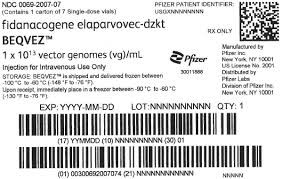
4. Side effects
Despite its significant therapeutic benefits, this therapy may be associated with some side effects. Among them, elevated transaminase is the most common, usually manifested by increased levels of alanine aminotransferase (ALT) and aspartate aminotransferase (AST), which may be caused by the liver immune response triggered by the AAV vector. However, most of these reactions can be effectively controlled with a short course of oral steroids, and patients' liver enzyme levels can usually return to normal ranges. In addition, some patients may develop an immune response against hepatocytes, manifesting as abnormal liver function or hepatitis-like symptoms. Liver function indicators and clinical symptoms need to be continuously monitored and the immunosuppressive treatment plan adjusted if necessary. Immunosuppressive therapy may increase the patient's risk of infection, especially viral or fungal infections, so infection indicators need to be strictly monitored during treatment and preventive anti-infective measures must be taken. A small number of patients may also develop systemic inflammatory reactions such as fever, chills, and fatigue, which require timely symptomatic treatment.
5. Warnings and precautions
When using Fidanaco - Ella Parvowitz gene therapy, a series of warnings and precautions need to be strictly followed. It is contraindicated in patients with antibodies to AAVRh74var to avoid treatment failure due to vector neutralization. It is also not suitable for patients who have developed FIX inhibitors, as it may trigger an immune response or make the treatment ineffective. Before treatment, it is necessary to confirm that the patient does not have relevant antibodies through serological testing to ensure the effectiveness of the vector. At the same time, patients with active liver disease or abnormal liver function need to be excluded to avoid increasing the burden on the liver. During treatment, it is necessary to closely monitor transaminase levels, promptly detect and deal with liver cell immune responses, use prophylactic antibiotics, and monitor infection indicators.
6. Drug interactions
At this time, there have been no clear reports of significant interactions between Fidanaco - Ella Parvovich gene therapy and other medications. Since this therapy achieves long-term effects through a single administration and its mechanism of action is based on gene delivery, it is theoretically not directly related to the metabolic pathways of conventional drugs. However, if patients need to take combined medications during treatment, it is still recommended to consult a doctor in detail to assess potential risks.
7. Medication for Special Populations
It should be noted that Fidanaco - Ella Parvowitz gene therapy has not yet conducted clinical trials in special populations (such as children and pregnant women), and there is no relevant medication data. Therefore, when using this therapy in these special populations, extreme caution and decision-making should be made under the guidance of a physician.
Reference materials:https://en.wikipedia.org/wiki/Fidanacogene_elaparvovec
[ 免责声明 ] 本页面内容来自公开渠道(如FDA官网、Drugs官网、原研药厂官网等),仅供持有医疗专业资质的人员用于医学药学研究参考,不构成任何治疗建议或药品推荐。所涉药品可能未在中国大陆获批上市,不适用于中国境内销售和使用。如需治疗,请咨询正规医疗机构。本站不提供药品销售或代购服务。


