
.jpeg)
How effective is midostaurin in treating AML? Clinical data and patient feedback
Midostaurin is a multi-target tyrosine kinase inhibitor that has shown significant results in the treatment of acute myeloid leukemia (AML) in recent years. It mainly inhibits the activity of FLT3 receptor tyrosine kinase and prevents the proliferation and survival of leukemia cells, thereby exerting a therapeutic effect. FLT3 (Fms-like tyrosine kinase 3) mutations have a high incidence in AML, and this mutation is often associated with leukemia relapse and poor prognosis. Midostaurin was developed for AML patients carrying FLT3 mutations, aiming to improve their treatment effects and prolong survival.
According to domestic and foreign clinical trial data released in 2017, midostaurin, used as a combined treatment regimen in combination with the chemotherapy drug cytarabine, has shown significant efficacy in the treatment of AML patients with FLT3 mutations. The FIT trial (FLY-AML-09) is a pivotal phase III clinical trial. The results showed that midostaurin combined with chemotherapy can significantly improve event-free survival (EFS) and overall survival (OS) compared with chemotherapy alone. Data from the trial showed that patients in the midostaurin plus chemotherapy group had a median event-free survival of 8.2 months, compared with only 3.0 months in the control group. Median overall survival also improved, from 25.6 months in the midostaurin combination group to 19.4 months in the control group.
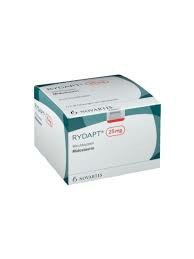
The effect of midostaurin is not limited to AML patients with positive FLT3 mutations. For those patients without FLT3 mutations, the effect of midostaurin is relatively weak. Therefore, detection of FLT3 mutations is critical for indications for midostaurin treatment. In addition, the use of midostaurin also improved the patient's remission rate and reduced the recurrence rate. Nonetheless, midostaurin is also associated with certain side effects. Common adverse reactions include nausea, vomiting, diarrhea, abnormal liver function, infection, and cardiotoxicity. These side effects need to be paid attention to in clinical use and mitigated through symptomatic treatment or adjustment of treatment options.
In terms of patient feedback, the use of midostaurin has brought about positive changes, especially in high-riskAML patients. Many patients report relief of symptoms and dramatic results after using midostaurin. However, some patients also report that the treatment process is difficult due to its side effects, especially during long-term treatment.
Reference materials:https://medlineplus.gov/druginfo/meds/a617033.html
[ 免责声明 ] 本页面内容来自公开渠道(如FDA官网、Drugs官网、原研药厂官网等),仅供持有医疗专业资质的人员用于医学药学研究参考,不构成任何治疗建议或药品推荐。所涉药品可能未在中国大陆获批上市,不适用于中国境内销售和使用。如需治疗,请咨询正规医疗机构。本站不提供药品销售或代购服务。


