
.jpeg)
Which one is better, nintedanib or pirfenidone? How effective do these two drugs compare in treating pulmonary fibrosis?
Nintedanib and pirfenidone are two drugs commonly used to treat idiopathic pulmonary fibrosis (IPF). Both drugs are widely used to slow the progression of pulmonary fibrosis and improve patients' quality of life. Although their therapeutic mechanisms are different, they have all been proven to be effective in slowing the progression of pulmonary fibrosis. However, there is still a certain degree of comparison regarding the efficacy of these two drugs, and the specific effect is affected by many factors such as individual patient differences, drug tolerance, and side effects.
Differences in mechanism of action
Nintedanib is a multi-target tyrosine kinase inhibitor that inhibits multiple signaling pathways, including those related to fibrosis, angiogenesis, and cell proliferation. Nintedanib slows the progression of fibrosis by inhibiting the proliferation and migration of fibroblasts. Pirfenidone is an anti-fibrotic drug that mainly slows down the progression of the disease by inhibiting the inflammatory response and oxidative stress produced during fibrosis. The mechanism of action of pirfenidone mainly includes reducing collagen synthesis, inhibiting fibroblast activation, and reducing fibrosis-related inflammatory responses.
Clinical efficacy comparison
According to data from multiple clinical trials, both nintedanib and pirfenidone can effectively slow down the course of idiopathic pulmonary fibrosis and reduce the rate of lung function decline. For example, the IMPACT study (a study on nintedanib) shows that nintedanib can effectively slow down the decline of lung function, reduce the loss of vital capacity, and reduce the hospitalization rate and mortality rate of patients. Similarly, the CAPACITY and ASCEND studies (studies on pirfenidone) also showed the slowing effect of pirfenidone on the decline of lung function, especially the positive effect in improving patients' 6 minute walking distance.
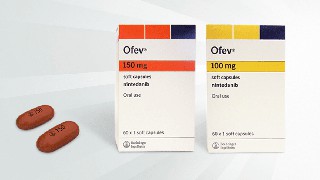
However, the difference in efficacy between the two drugs is not significant. The main advantage of nintedanib is that it can more comprehensively inhibit the fibrosis process through multi-target effects, and may be more effective for patients with more severe conditions. Pirfenidone has been shown to be better tolerated in some patients, especially when the side effects are mild, and may be more suitable for long-term use.
Side effects and tolerability
While both drugs are effective in slowing the progression of pulmonary fibrosis, their side effects vary widely, and patient tolerance may be a key factor in deciding which drug to choose. Common side effects of nintedanib include diarrhea, loss of appetite, nausea, vomiting, and abnormal liver function. Diarrhea occurs in approximately half of patients, but these symptoms can usually be relieved with dosage adjustments or medication management. Common side effects of pirfenidone include fatigue, loss of appetite, nausea, rash, and abnormal liver function, but are generally milder than nintedanib and are better tolerated in some patients.
Although the side effects of nintedanib may be more obvious, its anti-fibrotic effect is strong, and its efficacy is often more prominent in patients with more severe conditions. Due to its milder side effects, pirfenidone may be more suitable for some patients who are more sensitive to the side effects of the drug, or those who can tolerate its treatment.
Selection basis
When choosing between nintedanib and pirfenidone, doctors typically make the decision based on a patient's specific condition, tolerance, and side effects. For those patients with poor lung function or rapid disease progression, nintedanib may be a more suitable option because its multi-target mechanism can more effectively slow the progression of fibrosis. For some patients with sensitive or mild side effects, pirfenidone may be more suitable, especially if the patient tolerates its use well.
Both nintedanib and pirfenidone have shown good efficacy in the treatment of idiopathic pulmonary fibrosis. They have different mechanisms of action, but both can effectively slow down the decline of lung function and delay the progression of the disease. Although the two drugs have similar efficacy, differences in side effects may affect patients' treatment choices. Nintedanib has more obvious side effects and is suitable for patients with more severe conditions, while pirfenidone has mild side effects and is suitable for patients with better tolerance to side effects. The final choice should be based on the patient's specific situation and be decided by the doctor based on the patient's condition, tolerance and side effects.
Reference materials:https://en.wikipedia.org/wiki/Nintedanib
[ 免责声明 ] 本页面内容来自公开渠道(如FDA官网、Drugs官网、原研药厂官网等),仅供持有医疗专业资质的人员用于医学药学研究参考,不构成任何治疗建议或药品推荐。所涉药品可能未在中国大陆获批上市,不适用于中国境内销售和使用。如需治疗,请咨询正规医疗机构。本站不提供药品销售或代购服务。


