
.jpeg)
What is the mechanism of action of bimetinib? How does it work in the body?
Binimetinib is a targeted therapy drug that belongs to the MEK inhibitor class. It blocks cell signaling by inhibiting the action of the MEK (mitogen-activated protein kinase) pathway, thereby interfering with the growth and spread of cancer cells. MEK is a key molecule in the RAS-RAF-MEK-ERK signaling pathway, which plays an important role in a variety of cancer types, especially those associated with mutated or abnormally activated RAS genes.
Bimetinib works by selectively inhibiting the kinase activity of MEK1 and MEK2. MEK1 and MEK2 are key enzymes necessary to activate ERK1/2 (extracellular signal-regulated kinase). They are important downstream components of the RAS signaling pathway. When bimetinib inhibits MEK, activation of ERK is blocked, resulting in the cessation of cell proliferation and cell cycle arrest, thereby reducing the growth and spread of cancer cells. This mechanism is particularly effective in those tumor types where the MEK/ERK pathway is abnormally active.
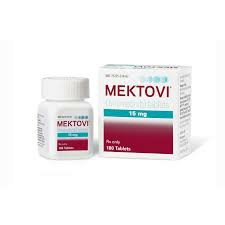
Bimetinib is rapidly absorbed into the bloodstream after oral administration, and is excreted in the form of metabolites through urine and feces after hepatic metabolism. Its half-life is moderate, allowing it to maintain a relatively long-lasting effect. Because bimetinib is metabolized by the liver, patients with hepatic impairment require special caution during use and may need dose adjustment or more frequent monitoring of liver function.
Bimetinib has strong targeting ability. It mainly acts on MEK1 and MEK2. Compared with other treatment methods, it has less impact on normal cells. This means it can effectively avoid extensive damage to normal cells and reduce side effects common in traditional chemotherapy. Nonetheless, MEK inhibitors may still have effects on some normal cells, particularly those cell types that rely on the MEK/ERK pathway.
Bimetinib is used to treat certain types of cancer, especially those associated with BRAF or RASMutation-associated tumors. For example, it has been approved in combination with other drugs to treat advanced melanoma, particularly in patients with BRAF mutations. In addition, additional clinical studies are ongoing to explore the efficacy of bimetinib in other tumor types, especially those with abnormalities in the MEK/ERK pathway.
Reference materials:https://go.drugbank.com/drugs/DB11967
[ 免责声明 ] 本页面内容来自公开渠道(如FDA官网、Drugs官网、原研药厂官网等),仅供持有医疗专业资质的人员用于医学药学研究参考,不构成任何治疗建议或药品推荐。所涉药品可能未在中国大陆获批上市,不适用于中国境内销售和使用。如需治疗,请咨询正规医疗机构。本站不提供药品销售或代购服务。


