
.jpeg)
What key things should you pay attention to when using belimumab?
Belimumab, as an innovative biologic, treats autoimmune diseases such as systemic lupus erythematosus (SLE) by changing the way the immune system works. However, as with all medications, belimumab requires some key considerations from patients to ensure the treatment is safe and effective.
First, if you are allergic to the active ingredient in the injection or infusionbelimumab (i.e., belimumab), or any of the inactive ingredients, then do not receive belimumab injection or infusion. Anaphylaxis can be life-threatening, so be sure to tell your healthcare provider about your allergies before using this medication.
Second, to make sure belimumab is safe for you, you need to tell your healthcare provider truthfully about all of your medical conditions. This includes whether you think you have an infection or if it keeps coming back, as the infection may worsen or affect the effectiveness of treatment. Also be sure to tell your healthcare provider if you have or have had mental health problems, such as depression or suicidal thoughts, as they will need to monitor your mental state closely.
Also, you need to be careful when using belimumab if you have recently been vaccinated or think you may need to be vaccinated. Because you should not receive live vaccines, such as measles, mumps, or chickenpox, while you are being treated with belimumab. At the same time, if you are allergic to other drugs, or are receiving other cyclophosphamide, biological drugs, or other monoclonal antibody drugs, you also need to inform your medical staff so that they can evaluate the risks of taking the drug.
Female patients who are pregnant or planning to become pregnant should be more cautious when using belimumab. It is not known whether belimumab can harm an unborn baby or affect its immune system, so you should ask your health care provider if you need contraception while taking belimumab. If you choose contraception, you should use an effective method of contraception while receiving belimumab and for at least4 months after the last dose.
At the same time, if you are breastfeeding or plan to breastfeed, you also need to discuss with your healthcare provider whether you should receive belimumab treatment. It is not known whether this drug passes into breast milk and could affect the baby.
While using belimumab, you also need to tell your healthcare provider about all the medicines you currently take, including prescription and over-the-counter medicines, vitamins, and herbal products. Because some drugs may interact with belimumab and affect the treatment effect. For example, studies do not support the use of belimumab and other biologic treatments, such as rituximab, in patients with SLE due to an increased incidence of serious infections and systemic reactions after injection.
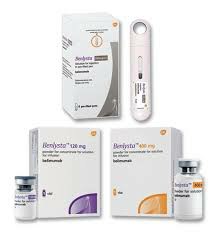
Finally, there is something to note about the storage of belimumab. Vials of belimumab for intravenous infusion should be stored in the original carton in a refrigerator at 36°F to 46°F (2°C to 8°C) until use to protect them from light. Also, don't freeze, don't shake, and avoid heat. Auto-injectors and prefilled syringes for subcutaneous injection also need to be stored in a refrigerator at 36°F to 46°F (2°C to 8°C). Do not freeze, shake, or expose to high temperatures.
In summary, when using belimumab, patients need to pay special attention to key considerations such as allergy history, medical conditions, vaccinations, drug interactions, and storage methods. Only by fully understanding and following these precautions can treatment be ensured to be safe and effective.
Reference materials:https://www.drugs.com/benlysta.html
[ 免责声明 ] 本页面内容来自公开渠道(如FDA官网、Drugs官网、原研药厂官网等),仅供持有医疗专业资质的人员用于医学药学研究参考,不构成任何治疗建议或药品推荐。所涉药品可能未在中国大陆获批上市,不适用于中国境内销售和使用。如需治疗,请咨询正规医疗机构。本站不提供药品销售或代购服务。


