
.jpeg)
How does belimumab work?
Belimumab , as an innovative specific inhibitor of B lymphocyte stimulating factor (BLyS), is gradually becoming an important drug for the treatment of active systemic lupus erythematosus (SLE) and lupus nephritis. SLE is an autoimmune disease that can affect almost any organ in the body, and its pathogenesis is closely related to the overactivity of B lymphocytes. Under normal circumstances, B lymphocytes produce antibodies to help fight infections, but in SLE patients, these antibodies attack the body's own cells and organs, forming autoantibodies. Particularly in lupus nephritis, autoantibodies attack the kidneys and affect their normal function.
Belimumab’s active substanceBelimumab is a monoclonal antibody that is carefully designed to attach to and block the action of the BLyS protein. The BLyS protein can help B lymphocytes live longer under normal circumstances, but in SLE patients, overactive BLyS can exacerbate the abnormal proliferation of B lymphocytes, thereby causing inflammation and organ damage. Belimumab effectively shortens the lifespan of B lymphocytes by blocking the action of BLyS, thereby reducing inflammation and organ damage that occurs in SLE.
The efficacy of belimumab has been fully verified in multiple clinical studies. In two major studies involving 1,693 adults with active SLE, belimumab, given by infusion as add-on therapy, significantly reduced disease activity. In the first study, 43% of patients who received belimumab experienced a reduction in disease activity, compared with only 34% of patients who received placebo. In the second study, the difference was even more striking, with 58% of patients treated with belimumab experiencing a reduction in disease activity, compared with 44% of patients in the placebo group. These data strongly demonstrate the effectiveness of belimumab in the treatment of adults with active SLE.
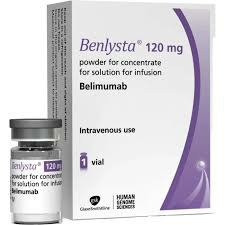
In addition to its significant efficacy in adultsSLE, belimumab has also shown good therapeutic effects in pediatric SLE patients. Results from a major study involving 93 children aged 5 to 17 years with active SLE showed that belimumab is distributed in the body in a similar manner to adults and can be expected to have similar benefits. This discovery provides new treatment options for pediatric SLE patients and is expected to improve their quality of life.
In addition, belimumab’s administration method is also more flexible and convenient. Another study involved 836 adults with active SLE who received add-on belimumab as a once-weekly subcutaneous injection for one year. The study results showed that 61% of patients treated with belimumab experienced a reduction in disease activity, compared with 48% of patients in the placebo group. This data not only demonstrates the effectiveness of subcutaneous belimumab but also provides strong support for its broad clinical application.
For patients with lupus nephritis, belimumab also brings hope. A pairThe study of 448 patients 18 years or older with active lupus nephritis showed that after two years of treatment, 43% of those who received belimumab had acceptable kidney function and urine protein levels (markers of kidney damage), compared with 32% of the placebo group. All patients received standard immunosuppressive therapy for lupus nephritis in addition to belimumab or placebo. This result further supports the efficacy and safety of belimumab in the treatment of lupus nephritis.
In summary, belimumab, as an innovativeB lymphocyte stimulating factor (BLyS) specific inhibitor, has shown significant efficacy in the treatment of active systemic lupus erythematosus and lupus nephritis. Its unique mechanism of action, flexible administration and broad clinical application prospects make belimumab a new hope for the treatment of such autoimmune diseases.
Reference materials:https://www.drugs.com/benlysta.html
[ 免责声明 ] 本页面内容来自公开渠道(如FDA官网、Drugs官网、原研药厂官网等),仅供持有医疗专业资质的人员用于医学药学研究参考,不构成任何治疗建议或药品推荐。所涉药品可能未在中国大陆获批上市,不适用于中国境内销售和使用。如需治疗,请咨询正规医疗机构。本站不提供药品销售或代购服务。


