
.jpeg)
Osimertinib/Tagrisso maintains OS improvement in EGFR mutated non-small cell lung cancer
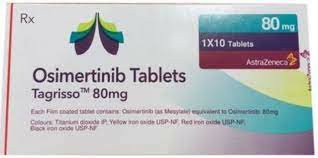
According to a press release from product developer AstraZeneca, osimertinib/Tagresa is available as monotherapy and combined with savolitinib or datopotamab. Deruxtecan-dlnk (Datroway) combination therapy shows sustained overall survival (OS) benefit in patients with EGFR-mutated non-small cell lung cancer (NSCLC)
InThe investigational drug was evaluated in 4 trials published in 2025: in the Phase 3 LAURA trial as monotherapy in patients with stage III EGFR-mutant NSCLC (NCT03521154); in the Phase 2 SAVANNAH trial as part of combination therapy with sarvotinib in patients with high MET-overexpressing EGFR-mutated NSCLC (NCT03778229); in ORCHARD In the phase 2 trial (NCT03944772), datopotamab deruxtecan-dlnk was combined with datopotamab deruxtecan-dlnk in patients with EGFR-mutated NSCLC who had progressed after previously receiving osimertinib; and in the phase 3 FLAURA2 trial, patients with locally advanced or metastatic EGFR-mutated NSCLC were sequenced with chemotherapy (NCT04035486).
Phase 1 and Phase 3LAURA trial
Results from the phase 3 LAURA trial presented at ELCC showed that osimertinib induced an OS benefit compared with placebo in patients with unresectable stage III EGFR-mutated NSCLC (hazard ratio [HR], 0.67; 95% CI, 0.40-1.14; Maturity, 31%). Median OS was 58.8 months (95% CI, 54.1-NC) in the osimertinib group and 54.1 months (95% CI, 42.1-NC) in the placebo group. Notably, 78% of patients who received placebo also received subsequent osimertinib treatment after disease progression.
In addition, results from previous studies published in 2024 showed that the median progression-free survival (PFS) in this patient population was 39.1 months (95% CI, 31.5-NC) in the osimertinib arm and 5.6 months (95% CI, 3.7-7.4) in the placebo arm. The 12-month and 24-month PFS rates in the study group were 74% (95% CI, 65%-80%) and 65% (95% CI-56%-73%), respectively, while those in the control group were 22% (95% CI/13%-32%) and 13% (95% CI, 6%-22%).
The primary endpoint of the trial is complianceBICR’s PFS. Key secondary endpoints include OS, central nervous system (CNS) PFS by BICR, objective response rate (ORR), duration of response (DOR) and safety. The impact of adverse reactions (AEs) on safety results and discontinuation rates was consistent with expectations, and no new issues were discovered.
Based on data from the LAURA trial, osimertinib was approved by the U.S. Food and Drug Administration in September 2024 for the treatment of patients with EGFR-mutated, locally advanced, unresectable stage III non-small cell lung cancer.
II. Phase IISAVANNAH trial
Results from the SAVANNAH phase 2 trial showed that in patients with EGFR-mutant NSCLC with high MET overexpression, osimertinib/savotinib had a confirmed ORR of 56% (95% CI, 45%-67%), a median DOR of 7.1 months (95% CI, 5.6-9.6), and a median PFS of 7.4 months (95% CI, 5.5-7.6). The primary endpoint of the study is ORR, and secondary endpoints include DOR and PFS. Safety results and discontinuation rates were consistent with the characteristics of each drug, and no new safety signals were reported, according to the study. Grade 3 or higher adverse events occurred in 57% of patients.
III. Phase IIORCHARD trial
In patients who received 4 mg/kg or 6 mg/kg datopotamab deruxtecan-dlnk in combination with osimertinib, the ORR was 43% (80% CI, 31%-55%) and 36% (80%, CI 25%-49%), respectively. In addition, the median PFS at each dose level was 9.5 months (95% CI, 7.2-9.8) and 11.7 months (95% CI, 8.3-NC), respectively, with 15% and 64% of patients maintaining response after 9 months of treatment. The primary endpoint of the trial is ORR, and secondary endpoints include PFS, DOR, and OS.
The safety profile of the individual formulations was consistent with its known safety profile, and no new safety concerns were identified. Grade 3 or higher treatment-related adverse events (TRAEs) occurred in 34% of patients receiving datopumab 4 mg/kg compared with 56% of patients receiving 6 mg/kg.
IV.FLAURA2 Phase III Trial
An exploratory post hoc analysis of the FLAURA2 trial showed that the median PFS of osimertinib plus pemetrexed plus cisplatin was greater than 2 years regardless of the duration of pemetrexed maintenance exposure. Additionally, previous results published in 2024 showed that median OS (NR; 95% CI, 38.0-NC) was not reached with osimertinib plus chemotherapy and 36.7 months (95% CI, 33.2-NC) with osimertinib alone (HR, 0.75; 95% CI, 0.57-0.97; Maturity, 41%). The primary endpoint of the trial is PFS.
The safety profile of osimertinib/chemotherapy was consistent with the established safety profile of each drug. Grade 3 or higher chemotherapy-related adverse events were reported in 16% of patients who received maintenance therapy for 3 to 9 months, and in 10% of patients who received maintenance chemotherapy for 9 months or longer. Adverse event-related discontinuation rates were 18% and 10%, respectively.
Reference materials:https://www.oncnursingnews.com/view/osimertinib-sustains-os-improvement-in-egfr-mutant-nsclc
[ 免责声明 ] 本页面内容来自公开渠道(如FDA官网、Drugs官网、原研药厂官网等),仅供持有医疗专业资质的人员用于医学药学研究参考,不构成任何治疗建议或药品推荐。所涉药品可能未在中国大陆获批上市,不适用于中国境内销售和使用。如需治疗,请咨询正规医疗机构。本站不提供药品销售或代购服务。


