
.jpeg)
How to use the drug Roprostim/Romigrastim
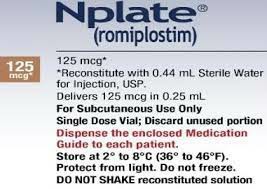
Romiplostim/Romiplostim, trade nameNplate, is a thrombopoietin receptor agonist, mainly used to treat immune thrombocytopenia (ITP) and other diseases. By binding to the thrombopoietin receptor (TPO-R), loplastin can promote the proliferation and differentiation of megakaryocytes in the bone marrow, ultimately increasing platelet production. The usage and dosage of this drug need to be individually adjusted according to the specific situation of the patient. The usage and dosage for different patient groups are detailed below.
1. How to use it for adult patients
For adult patients with immune thrombocytopenia (ITP), the initial dose of loplastin is 1 mcg/kg body weight once a week. The starting dose needs to be calculated based on the patient's weight and then adjusted based on changes in the patient's platelet count. Specifically, after treatment begins, doctors will monitor platelet counts regularly and adjust the dose weekly. Each dose adjustment should be 1 mcg/kg until the patient's platelet count reaches ≥50,000/mm. If the patient's platelet count does not reach the target value, the dose can continue to be increased, but the maximum dose should not exceed 10mcg/kg per week.
If a patient's platelet count exceeds200,000/mm for 2 weeks during treatment, doctors will usually consider reducing the dose. Specifically, each reduction is 1mcg/kg. When a patient's platelet count is greater than 400,000/mm, the drug should be discontinued immediately and the platelet count monitored weekly until the platelet count drops to <200,000/mm. At this point, the patient can resume treatment, but the dose will need to be readjusted.
2. How to use it in pediatric patients
For pediatric patients 1 year old and above, the starting dose of Roprostim is also 1mcg/kg body weight, once a week. Based on changes in the child's platelet count and weight, the doctor will adjust the dose weekly, increasing by 1mcg/kg each time until the child's platelet count reaches ≥50,000/mm. However, the maximum dose for pediatric patients is also 10 mcg/kg per week.
Similar to adult patients, if a pediatric patient has an excessively high platelet count (>200,000/mm and ≤400,000/mm) that persists for 2 weeks, each dose should be reduced by 1 mcg/kg. If the platelet count exceeds 400,000/mm, treatment will need to be suspended until the platelet count drops to<200,000/mm. At this time, platelet counts should be monitored weekly and treatment should be gradually resumed based on changes.
For pediatric patients, doctors also recommend evaluating the child's weight every 12 weeks. Changes in weight may affect dosage adjustments of treatment, so regular assessment of the child's weight is critical to ensure the effectiveness of treatment.
3. Treatment of hematopoietic abnormalities in acute radiation syndrome (H-ARS)
Roplastin can also be used to treat hematopoietic abnormalities caused by acute radiation syndrome (H-ARS). In this case, the dose of loplastin is 10 mcg/kg body weight, administered as a single subcutaneous injection. This treatment option is suitable for patients who have been exposed to sufficient doses of radiation to cause myelosuppression. Medications should be administered immediately after confirmed or suspected radiation exposure.
In summary, the use method and dosage of loplastin need to be reasonably adjusted based on the patient's age, weight, platelet count and other factors. For adult and pediatric patients, starting and maximum doses are specified, and dose adjustments during treatment are based on changes in the patient's platelet count.
Reference materials:https://en.wikipedia.org/wiki/Romiplostim
[ 免责声明 ] 本页面内容来自公开渠道(如FDA官网、Drugs官网、原研药厂官网等),仅供持有医疗专业资质的人员用于医学药学研究参考,不构成任何治疗建议或药品推荐。所涉药品可能未在中国大陆获批上市,不适用于中国境内销售和使用。如需治疗,请咨询正规医疗机构。本站不提供药品销售或代购服务。


