
.jpeg)
Osimertinib/Tagressa becomes new SOC for unresectable stage III EGFR+ NSCLC after definitive chemoradiotherapy
Based on LAURA released in 2025 The latest data from the phase 3 trial (NCT03521153) show that in patients with unresectable stage III non-small cell lung cancer (NSCLC) harboring EGFR mutations, Osimertinib/Tagressa (Osimertinib) showed a trend toward improved overall survival (OS) compared with placebo after final chemoradiotherapy. In a preliminary analysis of the trial, with a data cutoff of January 2024 and a maturity of 20%, median OS was 54.0 months (95% CI, 46.5-cannot be calculated [NC]) in the osimertinib arm (n = 143) and not reached in the placebo arm (n = 73; HR, 0.81; 95% CI, 0.42-1.56).
The updatedOS analysis, with data cutoff through November 2024, has a maturity of 31% and continues to show a trend toward improved OS benefit with osimertinib (median follow-up: 30.4 months) compared with placebo (median follow-up: 35.2 months). 1The median OS of each group was 58.8 months (95% CI, 54.1-NC) and 54.0 months (95% CI, 42.1-NC; HR, 0.67; 95% CI, 0.40-1.14; P=0.140). The 36-month OS rate was estimated to be 82% in the osimertinib group and 73% in the placebo group; the 48-month OS rates were 70% and 52%, respectively. Of note, in the placebo group, 80% of patients who discontinued study treatment subsequently received a third-generation EGFR TKI.
It is clear that osimertinib after radiotherapy and chemotherapy is the new standard for the treatment of unresectable patients with unresectable stage III EGFR mutated NSCLC. This randomized, double-blind, placebo-controlled international Phase 3 study (LAURA trial) enrolled 216 adult patients with locally advanced, unresectable stage III non-small cell lung cancer, no disease progression during or after chemoradiotherapy, and an EGFR exon 19 deletion or exon L858R mutation, a World Health Organization performance status score of 0 or 1, and a maximum interval of 6 weeks between the last dose of chemoradiotherapy and randomization. Patients are at least 18 years old, or 20 years old if registered in Japan.
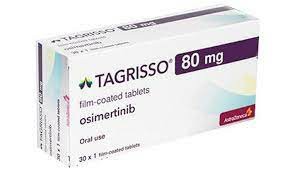
Study participants were randomly assigned in a 2:1 ratio to receive 80 mg of osimertinib or placebo orally once daily until blinded independent central review (BICR) or RECIST 1.1 disease progression, intolerable toxicity, or other discontinuation criteria were met. Of note, both groups received open-label osimertinib after disease progression.
The primary endpoint of the trial isBICR progression-free survival (PFS) assessed by RECIST 1.1, with secondary endpoints including OS and central nervous system PFS. Secondary post-progression endpoints included time to first subsequent treatment (TFST), PFS to second follow-up (PFS2), and time to second subsequent treatment (TSST).
Previous data from this study showed that osimertinib significantly improvedPFS in this population compared with placebo. 2 Median PFS was 39.1 months (95% CI, 31.5 not estimable) with osimertinib compared with 5.6 months (95% CI, 3.7-7.4) with placebo, representing an 84% reduction in the risk of disease progression or death (HR, 0.16; 95% CI, 0.10-0.24; P<0.001). These data support the U.S. Food and Drug Administration's decision to approve osimertinib in September 2024 for adult patients with locally advanced, unresectable stage III non-small cell lung cancer whose disease has not progressed during or after concurrent or consecutive platinum-based chemotherapy and whose tumors harbor EGFR exon 19 deletions or exon 21 L858R mutations. Investigator-assessed PFS was also consistent with the primary endpoint, with a hazard ratio of 0.19 (95% CI, 0.12-0.29; P<0.001), with osimertinib superior to placebo.
In the osimertinib group, the World Health Organization performance score56% were 0 and 44% were 1; in the placebo group, these percentages were 42% and 58%, respectively. In the osimertinib group, 52% of patients had an EGFR exon 19 deletion and 48% had an L858R mutation at screening; in the placebo group, these percentages were 59% and 41%, respectively. The median target lesion size of BICR was 33 mm in the osimertinib group and 36 mm in the placebo group.
Of the 143 patients randomly assigned to the osimertinib group, 48% were still receiving treatment and 52% had discontinued treatment. Thirty percent of patients received subsequent osimertinib treatment after discontinuing study treatment. Of the 73 patients randomly assigned to the placebo group, 5% were still receiving placebo and 95% had stopped taking it. Of note, 78% of these patients received subsequent osimertinib treatment after discontinuation of study treatment.
EGFR TKIs are the most common first subsequent treatment. In the osimertinib group, 73% of patients who discontinued randomized treatment (n=74) started first subsequent treatment (FST). FST included radiation therapy (31%), osimertinib (28%), cytotoxic chemotherapy (27%), another EGFR TKI (14%), VEGF inhibitor (7%), immunotherapy (5%), or other (4%). Among patients who discontinued randomized treatment in the placebo group (n=69), 87% initiated FST. FST included osimertinib (77%), radiotherapy (10%), another EGFR TKI (9%), cytotoxic chemotherapy (4%), and VEGF inhibitor (3%).
Cytotoxic chemotherapy is the most common second follow-up treatment. Compared with placebo, osimertinib also foundThere were clinically meaningful improvements in TFST, PFS2, and TSST. The median TFST was 43.8 months (95% CI, 39.9-NC) in the osimertinib group compared with 9.5 months (95% CI, 6.6-11.5) in the placebo group (HR, 0.13; 95% CI, 0.08-0.21; P<0.001). Median PFS2 was 48.2 months (95% CI, 44.4-NC) with osimertinib versus 47.4 months (95% CI, 28.2-NC) with placebo (HR, 0.62; 95% CI, 0.35-1.08; P=0.088). Compared with the osimertinib group and the placebo group, the median TSST did not reach 47.4 months, and the HR was 0.51 (95% CI, 0.28-0.91; P=0.022).
The long-term results from LAURA further support the superiority of osimertinib over placebo in patients with unresectable stage III EGFR-mutated NSCLC who have not progressed during or after chemoradiotherapy.
Reference materials:https://www.onclive.com/view/osimertinib-after-definitive-chemoradiation-is-new-soc-for-unresectable-stage-iii-egfr-nsclc
[ 免责声明 ] 本页面内容来自公开渠道(如FDA官网、Drugs官网、原研药厂官网等),仅供持有医疗专业资质的人员用于医学药学研究参考,不构成任何治疗建议或药品推荐。所涉药品可能未在中国大陆获批上市,不适用于中国境内销售和使用。如需治疗,请咨询正规医疗机构。本站不提供药品销售或代购服务。


