
.jpeg)
Is enzalutamide suitable for the treatment of advanced prostate cancer? How effective is it at this stage?
Enzalutamide is a new androgen receptor antagonist that is widely used in the treatment of advanced prostate cancer (especially castration-resistant prostate cancer, mCRPC). Its main mechanism of action is to block the signaling of androgen receptors, thereby inhibiting the growth and spread of tumor cells. Clinical studies have shown that enzalutamide can not only effectively reduce prostate-specific antigen (PSA) levels, but also significantly extend patients' progression-free survival (PFS) and overall survival (OS), making it one of the important options for the treatment of advanced prostate cancer.
In a clinical study of advanced prostate cancer, the PREVAIL trial evaluated enzalutamide in patients with mCRPC who had not received chemotherapy. The study results showed that enzalutamide significantly prolonged patients' overall survival (OS) and reduced the risk of disease progression by 81% compared with placebo. In addition, the patient's bone metastasis burden was reduced and PSA levels dropped significantly, indicating that enzalutamide is not only effective in tumor control but also improves patients' quality of life.
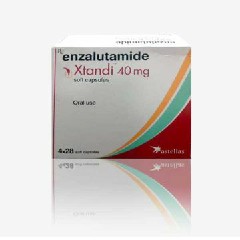
For patients with advanced prostate cancer who have received docetaxel (Docetaxel) chemotherapy, the AFFIRM trial further verified the efficacy of enzalutamide. The study found that compared with the placebo group, the overall survival of the enzalutamide group was extended by 4.8 months, and the proportion of patients whose PSA levels decreased by more than 50% was as high as 54%. These data demonstrate that enzalutamide can still provide significant therapeutic benefit to patients even after disease progression, making it one of the standard second-line treatment options for advanced prostate cancer.
However, although enzalutamide is effective in the treatment of advanced prostate cancer, some patients may still develop drug resistance during long-term use, leading to disease progression. In addition, some common adverse reactions such as fatigue, hypertension, cognitive impairment and risk of epilepsy also require close attention. Therefore, when using enzalutamide to treat advanced prostate cancer, doctors usually closely monitor the patient's PSA level and imaging changes, and make personalized dose adjustments based on the patient's tolerance to ensure that the therapeutic effect is maximized while minimizing the impact of side effects.
Reference materials:https://www.xtandi.com/
[ 免责声明 ] 本页面内容来自公开渠道(如FDA官网、Drugs官网、原研药厂官网等),仅供持有医疗专业资质的人员用于医学药学研究参考,不构成任何治疗建议或药品推荐。所涉药品可能未在中国大陆获批上市,不适用于中国境内销售和使用。如需治疗,请咨询正规医疗机构。本站不提供药品销售或代购服务。


