
.jpeg)
What are the indications for Osimertinib/Tagressa? Which patients are suitable for use?
As a third-generation EGFR inhibitor, Osimertinib is mainly used clinically to treat patients with EGFR-mutated non-small cell lung cancer (NSCLC). Its unique mechanism of action enables it to show significant efficacy in a series of EGFR mutant lung cancer patients, especially when drug resistance emerges. Osimertinib was initially approved to treat patients with resistance due to EGFR T790M mutations, but as research progressed, the indications for osimertinib were gradually expanded to include use in first-line treatment of patients with EGFR mutation-positive non-small cell lung cancer.
The indications of Osimertinib include but are not limited toPatients with EGFR mutation-positive advanced or metastatic non-small cell lung cancer, especially those with T790M mutation after first-line EGFR tyrosine kinase inhibitor (TKI) treatment. In these patients, osimertinib helps control further tumor growth and significantly prolong patient survival through its specific inhibitory effect on the T790M mutation. This drug is characterized by its ability to effectively penetrate the blood-brain barrier, so it also has a good effect in patients with brain metastases, making it an important treatment option for patients with non-small cell lung cancer with brain metastases.
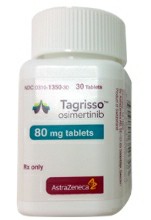
Osimertinib is also used as first-line treatment. For those patients with advanced non-small cell lung cancer who are positive for EGFR mutation, osimertinib can significantly improve the progression-free survival (PFS) of the patients. It has shown clinical efficacy superior to traditional first- and second-generation EGFR inhibitors, especially in patient groups with complex resistance mechanisms.
As for which patients are suitable for osimertinib, the first is patients with non-small cell lung cancer diagnosed asEGFR mutation-positive. Detection of EGFR mutations is a prerequisite for initiating osimertinib treatment. Secondly, those patients who have received first-line EGFR-TKI treatment and develop T790M mutation should consider osimertinib treatment as soon as possible, because this drug can effectively overcome the resistance caused by T790M mutation. In addition, for patients with brain metastases, osimertinib also has unique advantages because it can effectively penetrate the blood-brain barrier and treat brain metastases.
Reference materials:https://go.drugbank.com/drugs/DB09330
[ 免责声明 ] 本页面内容来自公开渠道(如FDA官网、Drugs官网、原研药厂官网等),仅供持有医疗专业资质的人员用于医学药学研究参考,不构成任何治疗建议或药品推荐。所涉药品可能未在中国大陆获批上市,不适用于中国境内销售和使用。如需治疗,请咨询正规医疗机构。本站不提供药品销售或代购服务。


