
.jpeg)
The main functions and efficacy of dabrafenib/dabrafenib: targeted therapy and tumor control
Dabrafenib is a drug used for targeted therapy, specifically targeting cancers with BRAF gene mutations. As a small molecule targeted drug, dabrafenib specifically acts on the BRAF V600E mutant protein, thereby inhibiting the proliferation of cancer cells and having significant anti-tumor effects. Since it was first approved for clinical use, dabrafenib has become an important part of the treatment regimen for many cancer patients, especially in the treatment of melanoma, thyroid cancer and non-small cell lung cancer (NSCLC).
1. Targeted therapy: Why choose dabrafenib?
Dabrafenib is a targeted drug, which means that it can precisely act on specific molecular targets in cancer cells to achieve tumor suppression. BRAF is a gene involved in cell proliferation and differentiation. Under normal circumstances, the BRAF protein it encodes is involved in cell signaling and regulates cell proliferation and growth. However, the BRAF gene is mutated in some cancers, especially the V600E mutation. This mutated BRAF protein is abnormally active and continues to promote cell proliferation, leading to the occurrence and development of tumors.
Dabrafenib binds toBRAF V600E mutant protein and inhibits its activity, thereby effectively blocking downstream signaling pathways (such as the MAPK/ERK pathway), reducing the proliferation and viability of cancer cells, and ultimately leading to tumor shrinkage and stability. Compared with traditional chemotherapy, the advantage of targeted therapy is that it is more selective and specific, and can reduce damage to normal healthy cells. Therefore, it has fewer side effects and more precise therapeutic effects.
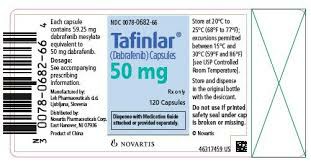
2. Clinical application and therapeutic effect of dabrafenib
The main indications for dabrafenib includeBRAF mutation-positive melanoma, non-small cell lung cancer (NSCLC) and advanced ovarian cancer. Among them, the therapeutic effect of BRAF mutation-positive melanoma patients is the most significant, especially when traditional treatment methods are ineffective, dabrafenib brings new hope to patients.
In the treatment of melanoma,The BRAF V600E mutation has a high incidence in this disease, so dabrafenib is of great significance to this group of patients. Multiple clinical studies have shown that dabrafenib can significantly prolong the progression-free survival (PFS) and overall survival (OS) of patients, and can effectively slow down the progression of the disease. Usually, dabrafenib is used in combination with trametinib, a MEK inhibitor, which can further enhance the therapeutic effect and obtain better anti-tumor effects by simultaneously inhibiting the downstream MEK/ERK pathway.
In addition, dabrafenib has also made significant progress in the treatment of non-small cell lung cancer (NSCLC), especially for those patients with BRAF V600E mutation-positive NSCLC. When traditional chemotherapy and immunotherapy have limited effects, dabrafenib, as a targeted therapy, provides a new treatment option. Studies have shown that dabrafenib can effectively control tumor growth and delay disease progression in BRAF mutation-positive NSCLC.
With the in-depth understanding ofBRAF mutation mechanism, the indications of dabrafenib continue to expand and may play a role in the treatment of more types of tumors in the future. Researchers are exploring the use of dabrafenib in combination with other immunotherapy and targeted therapy drugs in order to further improve the anti-tumor effect through multi-target synergy.
Reference materials:https://go.drugbank.com/drugs/DB08912
[ 免责声明 ] 本页面内容来自公开渠道(如FDA官网、Drugs官网、原研药厂官网等),仅供持有医疗专业资质的人员用于医学药学研究参考,不构成任何治疗建议或药品推荐。所涉药品可能未在中国大陆获批上市,不适用于中国境内销售和使用。如需治疗,请咨询正规医疗机构。本站不提供药品销售或代购服务。


