
.jpeg)
What is the difference between pitobrutinib and zanubrutinib? What are the differences in efficacy and indications between the two?
Pirtobrutinib and zanubrutinib (Zanubrutinib) are targeted drugs belonging to the Bruton tyrosine kinase (BTK) inhibitor class. They are used in the treatment of certain types of It has shown good efficacy in lymphomas, especially mantle cell lymphoma (MCL) and chronic lymphocytic leukemia (CLL) and other B cell-related cancers. However, there are some significant differences in the chemical structure, efficacy, safety, and indications of these two drugs. This article will conduct a detailed comparison of these two drugs and analyze their differences in clinical application.
1. The difference between drug mechanism and mode of action
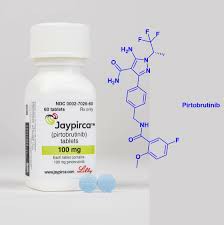
Although both pitobrutinib and zanubrutinib are BTK inhibitors, their mechanisms of action are different. Pitobrutinib is a highly selective BTK inhibitor. It can bind to BTK in a non-covalent manner and inhibit the kinase activity of BTK, thus preventing the activation, proliferation and survival of B cells. Unlike traditional covalently bound BTK inhibitors, pitobrutinib is also effective against BTK with existing mutations or drug-resistant mutations, which makes it more effective in patients with some common BTK mutations.
Zanubrutinib is a covalently bound BTK inhibitor. It inhibits the activity of BTK by forming a covalent bond with the cysteine residue of BTK. Zanubrutinib plays an anti-tumor effect by blocking the signaling of BB cell receptors. Although the mechanisms of zanubrutinib and pitobrutinib are based on inhibiting BTK, zanubrutinib has a more direct effect and has a strong affinity, making it suitable for many different types of B cell-related cancers.
2. Differences in efficacy
The two performed differently in clinical trials, particularly in how patients responded to prior treatments. Pitobrutinib has shown good efficacy in some cases of drug resistance or mutation, especially in patients who are resistant to other BTK inhibitors. Its non-covalent binding characteristics enable it to overcome some common BTK mutations, such as the C481S mutation, resulting in the drug having wider adaptability among patient groups.
Zanubrutinib has also shown significant efficacy in the treatment of mantle cell lymphoma (MCL) and chronic lymphocytic leukemia (CLL). Its potent BTK inhibition and good tolerability make zanubrutinib an effective treatment option, especially in patients who have been ineffective or resistant to previous treatments, showing good clinical effects.
3. Differences in indications
Pitobrutinib is mainly used to treat patients with chronic lymphocytic leukemia (CLL), small lymphocytic lymphoma (SLL) and certain high-risk mantle cell lymphoma (MCL) who are resistant to previous treatments. Because of its ability to overcome some common BTK mutations, it is widely used in patient populations that are resistant to other BTK inhibitors.
Zanubrutinib has a wider range of indications. In addition to treating chronic lymphocytic leukemia (CLL) and mantle cell lymphoma (MCL), it is also used to treat other types of B cell malignancies, such as marginal zone lymphoma, follicular lymphoma, etc. In addition, zanubrutinib has good efficacy and safety in the treatment of B cell-related malignant tumors and is widely applicable to various B cell-derived tumors.
4. Safety and Side Effects
Regarding side effects, the side effect profiles of pitobrutinib and zanubrutinib are similar but differ in some respects. Common side effects include thrombocytopenia, anemia, diarrhea, peripheral edema, etc. Pitobrutinib may have fewer side effects in some patients due to its non-covalent binding characteristics, especially if it is better tolerated in long-term use. Because of its covalent binding properties, zanubrutinib may cause some serious side effects, especially during long-term use. It is important to note that there may be a risk of drug interactions when zanubrutinib is used in combination with other therapeutic drugs.
In general, both pitobrutinib and zanubrutinib are treatmentsBEffective drugs for cell-associated tumors, but their use is influenced by multiple factors, including the patient's specific condition, BTK mutations, drug tolerance, and the choice of other treatment options. Pitobrutinib's advantages in patients with drug-resistant mutations make it an important option, while zanubrutinib is suitable for more types of B cell-related malignancies due to its potent BTK inhibition and good tolerability. Based on the patient's specific situation, the doctor can choose the most appropriate drug for the patient.
Reference materials:https://www.jaypirca.com/
[ 免责声明 ] 本页面内容来自公开渠道(如FDA官网、Drugs官网、原研药厂官网等),仅供持有医疗专业资质的人员用于医学药学研究参考,不构成任何治疗建议或药品推荐。所涉药品可能未在中国大陆获批上市,不适用于中国境内销售和使用。如需治疗,请咨询正规医疗机构。本站不提供药品销售或代购服务。


