
.jpeg)
Comparison of targeted therapeutic mechanisms and indications between dabrafenib/dabrafenib and trametinib
Dabrafenib and Trametinib are currently important targeted drugs for the treatment of cancers related to BRAF V600E mutations, and their combination has become one of the standard regimens for the treatment of such cancers. These drugs respectively target different molecular targets, inhibit tumor growth by blocking the proliferation signals of cancer cells, and have achieved significant clinical effects. Understanding their respective treatment mechanisms, indications, and efficacy of combined use is of great significance to patients when choosing treatment options.
1. Mechanism of action of dabrafenib
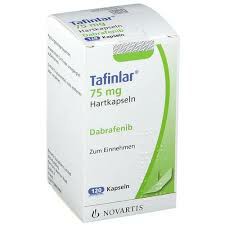
Dabrafenib is aBRAF inhibitor. Its main mechanism of action is to specifically inhibit the kinase activity of BRAF V600 mutant protein. The BRAF gene is an important part of the intracellular MAPK signaling pathway. When the BRAF gene is mutated, especially the V600E and V600K mutations, the activity of BRAF kinase will be abnormally enhanced, leading to the overactivation of downstream signaling molecules such as MEK and ERK, thereby promoting the proliferation and survival of cancer cells. By selectively inhibiting the BRAF V600 mutant protein, dabrafenib can effectively cut off this abnormal signaling pathway, reduce the proliferation of cancer cells, and promote tumor cell death.
The indications of dabrafenib include advanced or metastatic BRAF V600E mutated melanoma, BRAF V600E mutated non-small cell lung cancer (NSCLC), BRAF V600E mutated thyroid cancer, etc. Clinically, dabrafenib, as a single agent or combination therapy, has significant efficacy against these mutation-positive tumors. Especially in the treatment of advanced melanoma, dabrafenib monotherapy can significantly prolong progression-free survival (PFS) and overall survival (OS).
2. Mechanism of action of trametinib
Trametinib is a kind ofMEK inhibitor. Its mechanism of action is to block the downstream signaling of the MAPK signaling pathway by inhibiting the kinase activity of MEK1 and MEK2. MEK is an enzyme directly affected by BRAF activation. The activation of MEK promotes the phosphorylation of ERK, further promoting cell proliferation and survival. Since BRAF and MEK are closely related in the MAPK pathway, inhibiting the activity of MEK can effectively interfere with this signaling pathway and reduce the growth of tumor cells.
Indications for trametinib includeMelanoma, non-small cell lung cancer (NSCLC) with BRAF V600E or V600K mutations, and some other BRAF mutation-positive malignancies. Trametinib is often used with dabrafenib as part of combination therapy to enhance antitumor effects. In the treatment of advanced melanoma, the combined use of trametinib and dabrafenib can significantly improve the efficacy and reduce the possible resistance to single-agent therapy.
3. Advantages of combined treatment options
The combination of BRAF inhibitors (such as dabrafenib) and MEK inhibitors (such as trametinib) has become the standard treatment for BRAF V600 mutation-positive tumors. The main advantage of this combination therapy is that it blocks tumor cell proliferation signals through dual mechanisms and significantly delays the occurrence of drug resistance in tumor cells. Dabrafenib alone may be effective initially, but resistance may develop over time. Adding trametinib to the treatment plan can effectively extend progression-free survival, reduce the development of drug resistance, and improve the overall treatment effect.
In addition, the side effects of combination therapy are also more controllable. Although both may cause some side effects, such as rash, fever, nausea, fatigue, etc., the frequency and severity of side effects of combination therapy are effectively managed compared to single drug therapy. Doctors usually adjust the dosage according to the patient's specific condition to ensure the therapeutic effect and the patient's quality of life.
4. Comparison of clinical effects
In clinical studies, the combination treatment of dabrafenib and trametinib has demonstrated significant efficacy against BRAF V600 mutation-positive tumors. For example, in the treatment of melanoma, combination therapy can not only significantly improve the response rate of treatment, but also effectively prolong progression-free survival (PFS). In addition, the therapeutic effect of combination therapy in other BRAF V600 mutation-positive malignancies, such as non-small cell lung cancer and colorectal cancer, has also been well verified.
In non-small cell lung cancer (NSCLC), BRAF V600E mutation is one of the causes in a small number of patients. For these patients, treatment with dabrafenib combined with trametinib can effectively control tumor progression and prolong patient survival. This combination therapy has become a standardized treatment option for lung cancer patients with BRAF V600E mutations.
Reference materials:https://go.drugbank.com/drugs/DB08912
[ 免责声明 ] 本页面内容来自公开渠道(如FDA官网、Drugs官网、原研药厂官网等),仅供持有医疗专业资质的人员用于医学药学研究参考,不构成任何治疗建议或药品推荐。所涉药品可能未在中国大陆获批上市,不适用于中国境内销售和使用。如需治疗,请咨询正规医疗机构。本站不提供药品销售或代购服务。


