
.jpeg)
How does Glasgib/Glasgib compare to traditional chemotherapy drugs?
Glasdegib is a new oral small molecule targeted drug mainly used to treat acute myeloid leukemia (AML). Compared with traditional chemotherapy drugs, Glasgib has significant differences in its mechanism of action, efficacy, safety and tolerability. Its unique mode of action makes it an important treatment option for AML patients, especially those who are elderly or unable to tolerate intense chemotherapy. This article will analyze the main differences between Glasgib and traditional chemotherapy, and explore its clinical value in the treatment of AML.
In terms of its mechanism of action, Glasgib is an inhibitor of the Hedgehog signaling pathway. It inhibits the abnormal activation of the Hedgehog pathway by targeting the Smoothened (SMO) protein, thereby blocking the growth and survival of leukemia cells. The Hedgehog signaling pathway plays a key role in the self-renewal and maintenance of leukemia stem cells, so by inhibiting this pathway, Glassgib was able to reduce the proliferation of leukemia cells and potentially enhance the sensitivity of AML patients to other treatment options. In comparison, traditional chemotherapy drugs such as Cytarabine and Daunorubicin mainly kill cancer cells by destroying DNA synthesis and interfering with cell cycle progression. Although this method is effective, it often also causes great damage to the normal hematopoietic system.
In terms of clinical efficacy, Glasgib has been approved for use in combination with low-dose cytarabine (LDAC) to treat AML patients who are unable to receive standard chemotherapy. Studies have shown that the regimen of Glasgib combined with LDAC significantly prolonged the overall survival (OS) of patients. Compared with patients treated with LDAC alone, the median overall survival of the Glasgib combination treatment group was significantly improved. This result shows that Glasgib can enhance the effect of low-dose chemotherapy and provide a more tolerable treatment regimen for elderly or frail patients. Traditional chemotherapy has a higher response rate in young AML patients, but for older patients or patients with poor physical status, it is more toxic and poorly tolerated. Many patients have difficulty completing a complete course of treatment, so the efficacy is limited.
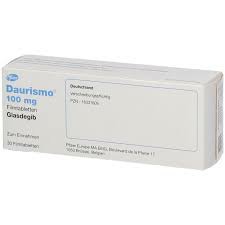
From a safety perspective, Glasgib exhibits a more controllable side effect profile compared to traditional chemotherapy. Traditional chemotherapy drugs often cause side effects such as bone marrow suppression, severe infection, gastrointestinal reactions, and hair loss due to extensive damage toDNA. The main adverse reactions of Glasgib include fatigue, nausea, decreased appetite and muscle cramps, and its bone marrow suppression effect is relatively mild. In addition, Glasgib is less likely to cause serious risks of infection and bleeding, which is particularly important in older patients. However, the long-term safety of Glasgib still needs further study, especially concerns about possible cardiotoxicity and muscle discomfort.
In terms of tolerance, Glassgib's advantages are particularly obvious. Because it is an oral drug, patients can take it at home without requiring hospitalization for intravenous infusion. Compared with the traditional hospitalization treatment model of chemotherapy, it significantly improves the patient's quality of life. Particularly for older patients, reducing the frequency of healthcare facility visits can help reduce the risk of complications and improve treatment compliance. In addition, Glasgib's relatively mild toxicity allows patients to adhere to treatment for a longer period of time, while traditional chemotherapy often causes patients to be intolerable and forced to discontinue treatment due to its severe side effects.
Although Glassgib shows good promise inAML treatment, it still has certain limitations. First, it is mainly suitable for patients who cannot tolerate standard chemotherapy. For young, high-risk AML patients, its efficacy may not be as effective as traditional high-intensity chemotherapy regimens. In addition, the drug resistance problem of Glasgib still needs further study. There are reports that some patients may develop drug resistance after using Glasgib for a period of time. This requires further exploration of combination treatment options to overcome the resistance problem and improve efficacy.
Reference materials:https://go.drugbank.com/drugs/DB11978
[ 免责声明 ] 本页面内容来自公开渠道(如FDA官网、Drugs官网、原研药厂官网等),仅供持有医疗专业资质的人员用于医学药学研究参考,不构成任何治疗建议或药品推荐。所涉药品可能未在中国大陆获批上市,不适用于中国境内销售和使用。如需治疗,请咨询正规医疗机构。本站不提供药品销售或代购服务。


