
.jpeg)
Which is better, canafenib or bimetinib? Comparison of mechanism of action and applicable groups
Encorafenib and bimetinib ( Binimetinib) are two targeted drugs commonly used to treat cancers related to BRAF V600E mutations. Although both drugs target the BRAF mutation signaling pathway, their mechanisms of action, applicable populations, and clinical efficacy are different. Understanding these differences can help select appropriate treatment options in clinical practice and improve treatment effects.
First of all, the difference in the mechanism of action between canafenib and bimetinib is the key to their therapeutic effect. Canafenib is a BRAF inhibitor that mainly works by inhibiting the kinase activity of BRAF V600E mutant protein. The BRAF gene is a key component in the MAPK/ERK signaling pathway and is involved in regulating cell proliferation, differentiation and survival. The BRAF V600E mutation causes continued activation of the protein and promotes uncontrolled proliferation of tumor cells. Therefore, canafenib inhibits the proliferation of tumor cells by blocking this signaling pathway, thereby playing a therapeutic role in BRAF V600E mutation-positive tumors.
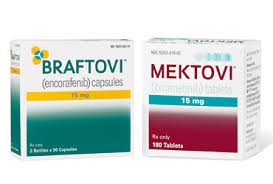
Different from this, bimetinib is aMEK inhibitor that mainly works by inhibiting the MEK1 and MEK2 kinase activities in the MAPK/ERK pathway. MEK is a downstream kinase involved in activating the ERK signaling pathway, thereby promoting the proliferation and survival of tumor cells. Bimetinib further reduces the proliferation of tumor cells by inhibiting the activity of MEK and blocking the ERK pathway. Therefore, bimetinib mainly acts on the signaling pathway subsequent to BRAF mutation and complements canafenib. The combined use of the two can enhance the efficacy.
In terms of the applicable population, canafenib is mainly used to treat malignant tumors such as BRAF V600E mutation-positive melanoma and colorectal cancer. Clinical studies have shown that canafenib can effectively prolong the progression-free survival (PFS) and overall survival (OS) of patients with BRAF V600E mutation-positive advanced melanoma. Especially when used in combination with other drugs, the effect is more significant. Bimetinib is also suitable for BRAF V600E mutation-positive tumors, especially in melanoma, colorectal cancer, and other solid tumors. Studies have shown that bimetinib has a good response to targeted therapy of BRAF V600E mutations, especially when combined with BRAF inhibitors such as canafenib, which can significantly improve the prognosis of patients.
From the perspective of combination therapy, the combination therapy of canafenib and bimetinib has been used in clinical practice. ForFor patients with BRAF V600E mutation-positive melanoma, the combination of canafenib and bimetinib has been approved and has shown more significant efficacy. As a BRAF inhibitor, canafenib can effectively inhibit the activity of mutant BRAF protein, while bimetinib, as a MEK inhibitor, further enhances the therapeutic effect by inhibiting the activity of downstream pathways. Clinical studies have shown that this combination therapy can significantly extend the progression-free survival (PFS) of patients, and that combination therapy can better prevent tumor drug resistance than monotherapy.
Although combination therapy offers significant advantages, the choice of monotherapy or combination therapy also depends on the patient's specific circumstances. For early-stage patients, single-agent therapy may be effective enough, especially if the tumors are small and the disease has not spread widely. For patients with advanced or metastatic disease, combination therapy often provides stronger anti-tumor effects.
Reference materials:https://www.braftovi.com/
[ 免责声明 ] 本页面内容来自公开渠道(如FDA官网、Drugs官网、原研药厂官网等),仅供持有医疗专业资质的人员用于医学药学研究参考,不构成任何治疗建议或药品推荐。所涉药品可能未在中国大陆获批上市,不适用于中国境内销售和使用。如需治疗,请咨询正规医疗机构。本站不提供药品销售或代购服务。


