
.jpeg)
Can ritexitinib completely cure alopecia areata? Analysis of long-term efficacy and recurrence possibility
Ritlecitinib as a newJanus kinase (JAK) and TEC kinase inhibitor, has shown good efficacy in the treatment ofAlopecia Areata (Alopecia Areata). However, there is still no conclusive scientific evidence to support whether it can completely cure alopecia areata. Judging from the existing clinical data, ritexitinib can significantly improve patients' hair regeneration, but its long-term efficacy and recurrence risk still require further study.
Alopecia areata is an autoimmune disease, which is mainly caused by abnormal activation of the immune system, leading to attacks on hair follicles, thereby causing hair loss. As a JAK/TEC kinase inhibitor, ritexitinib can reduce the attack of immune cells on hair follicles by inhibiting the JAK1 and JAK3 signaling pathways, thereby promoting hair regeneration. In phase III clinical trials, ritexitinib had a significant therapeutic effect on patients with moderate to severe alopecia areata. Some patients achieved scalp hair coverage of more than 50% within 24 to 36 weeks, and some patients even had their hair completely restored.
However, it should be noted that although ritexitinib can effectively promote hair regeneration, it cannot change the nature of the patient's immune system, nor can it completely eliminate the underlying cause of alopecia areata. Therefore, patients are still at risk of relapse once the medication is discontinued.
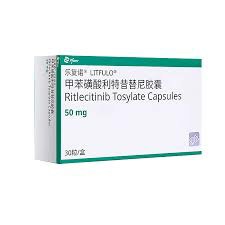
Despite good short-term efficacy, recurrence of alopecia areata remains a key challenge. Studies have shown that some patients may experience hair loss again within a few months after stopping rituxitinib. This is mainly because the drug only suppresses the immune system's attack on hair follicles, but does not completely eliminate the immune abnormalities that cause alopecia areata.
In terms of long-term treatment, ritixitinib is better tolerated and safer than traditional therapies (such as glucocorticoids, cyclosporine, etc.). Clinical trial data shows that most patients can still maintain good hair regeneration effects even if they continue to use it for more than a year, and the side effects are relatively controllable. However, there is currently insufficient long-term follow-up study data to prove that the drug can maintain its efficacy for more than several years, and whether long-term use will affect the stability of the immune system still requires further study.
The recurrence of alopecia areata may be affected by many factors, including genes, environment, psychological stress, immune system changes, etc. Even during treatment, if the patient's immune system is exposed to new stimuli (such as infection, excessive stress, malnutrition, etc.), it may cause hair to fall out again. In addition, the tolerance of some patients' immune systems to JAK/TEC inhibitors may change over time, which may also affect the effectiveness of treatment.
Taken together, ritexitinib is still not considered a drug that can completely cure alopecia areata, but it does provide patients with a more effective long-term treatment option. For some patients, long-term use of this drug can maintain hair growth and reduce the likelihood of recurrence. However, due to the complex etiology of alopecia areata, ritexitinib cannot fundamentally eliminate the pathogenesis, so there is still a risk of recurrence. In the future, as more research is conducted, more precise treatment strategies may be developed to make the treatment effect of alopecia areata more durable and stable.
Reference materials:https://www.litfulo.com/
[ 免责声明 ] 本页面内容来自公开渠道(如FDA官网、Drugs官网、原研药厂官网等),仅供持有医疗专业资质的人员用于医学药学研究参考,不构成任何治疗建议或药品推荐。所涉药品可能未在中国大陆获批上市,不适用于中国境内销售和使用。如需治疗,请咨询正规医疗机构。本站不提供药品销售或代购服务。


