
.jpeg)
What is the difference between Glasdegib/Glasdegib and Venekra?
Glasdegib and Venetoclax are two targeted drugs used to treat acute myeloid leukemia (AML). They have significant differences in their mechanisms of action, indications, usage and side effects. With the development of precision medicine, targeted drugs targeting different molecular mechanisms have gradually become an important means of AML treatment. Therefore, understanding the differences between these two drugs is crucial for patients and clinicians to choose appropriate treatment options.
First of all, from the perspective of its mechanism of action, Glasgib is aHedgehog signaling pathway inhibitor, while Venetoclax is a BCL-2 inhibitor. The Hedgehog signaling pathway plays an important role during embryonic development, but in some cancer types it is abnormally activated, promoting the growth and survival of tumor cells. Glasgib inhibits the Smoothened (SMO) protein of the Hedgehog pathway, thereby preventing signal transduction, causing leukemia cells to lose their self-renewal ability, thereby reducing their proliferation ability. In contrast, venetoclax targets the protein BCL-2, an anti-apoptotic protein that is abnormally highly expressed in many hematological malignancies, allowing cancer cells to evade clearance by the immune system. Venetoclax achieves therapeutic effects by selectively inhibiting BCL-2 and promoting apoptosis of cancer cells. Therefore, the two mechanisms of action are completely different. Glasgib mainly affects the proliferation of tumor cells, while venetoclax directly induces apoptosis.
In terms of indications, both Glasgib and Venetoclax are used to treat AML patients who are not suitable for intensive chemotherapy. However, there are differences in the applicable populations. The primary indication for glazegib is in combination with low-dose cytarabine (LDAC) for the treatment of newly diagnosed AML in adult patients aged ≥75 years or with severe comorbidities. The indications of venetoclax are broader. It is usually used in combination with azacitidine, decitabine or LDAC, and is suitable for newly diagnosed AML patients who are intolerant to standard intensive chemotherapy. In addition, venetoclax can also be used in chronic lymphocytic leukemia (CLL) and small lymphocytic lymphoma (SLL), and its range of applications is significantly wider.
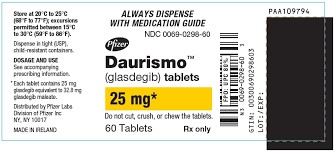
In terms of efficacy, the clinical data of venetoclax is relatively more mature, and has been shown in Exhibited high complete response rate (CR) in AML patients. According to clinical trial data, the complete response rate of venetoclax combined with azacitidine or decitabine in the treatment of AML patients can reach more than 50%, while the response rate of glasgib combined with LDAC is relatively low, about 25%-30%. In addition, treatment with venetoclax has also shown more durable progression-free survival (PFS) and longer overall survival (OS), making it one of the mainstream options for AML treatment in recent years. However, it should be noted that the efficacy also depends on the patient's specific condition, genetic mutation, and tolerance to treatment. Therefore, the quality of a drug cannot be determined solely based on clinical trial data.
In terms of use, both Glasgib and Venetoclax are oral drugs, but their combination treatment regimens are different. Glasgib is usually taken at a dose of 100 mg once daily in combination with low-dose cytarabine (LDAC). The use of venetoclax is more complicated and usually requires a gradual increase in dosage to reduce the risk of tumor lysis syndrome (TLS). Patients will start with a lower dose (such as 20 mg) for the first few days and then gradually increase to 400 mg daily. In addition, venetoclax is often combined with hypomethylating drugs (azacitidine or decitabine) to enhance its antileukemia effect.
In terms of safety, both Glasgib and Venetoclax have certain side effects. Common side effects of Glasgib include fatigue, muscle cramps, nausea, anemia, thrombocytopenia, etc. Some patients may experience QT interval prolongation and require regular ECG monitoring. The main side effects of venetoclax include bone marrow suppression (such as neutropenia), tumor lysis syndrome (TLS), gastrointestinal discomfort, and increased risk of infection. In particular, TLS is a special adverse reaction of venetoclax. Due to the inhibitory effect of BCL-2, it will cause a large number of leukemia cells to undergo rapid apoptosis, thus releasing a large amount of metabolites, which may cause electrolyte imbalance and acute kidney injury. Therefore, the use of venetoclax usually requires strict monitoring of renal function and electrolyte levels, as well as hydration and prophylactic medication during the initial stages of treatment.
From the perspective of patient accessibility, venetoclax entered the market earlier than Glasgib and has been widely used in many countries, with more real-world data supporting its efficacy. Glass Gibb is relatively new, currently has a low usage rate globally, and has not yet been officially launched in China, so it is difficult to obtain. Since both are patented drugs, their prices are relatively expensive, especially the original drug of Glasgibb. Patients usually need to obtain it through overseas drug purchase channels, while Venetoclax has been launched in the country and has been included in the medical insurance catalog, reducing the financial burden on patients.
References:https://becarispublishing.com/doi/10.2217/cer-2020-0280
[ 免责声明 ] 本页面内容来自公开渠道(如FDA官网、Drugs官网、原研药厂官网等),仅供持有医疗专业资质的人员用于医学药学研究参考,不构成任何治疗建议或药品推荐。所涉药品可能未在中国大陆获批上市,不适用于中国境内销售和使用。如需治疗,请咨询正规医疗机构。本站不提供药品销售或代购服务。


