
.jpeg)
What is the mechanism of action of ivonib? How to inhibit cancer cell growth?
Ivosidenib is a targeted therapy drug that is an IDH1 inhibitor. It exerts anti-tumor effects by inhibiting the abnormal activity of isocitrate dehydrogenase 1 (IDH1). IDH1 is an enzyme involved in cell metabolism. Under normal circumstances, IDH1 is responsible for converting isocitrate into α-ketoglutarate. However, in some cancers, the IDH1 gene is mutated, causing the enzyme to function abnormally, thereby producing 2-hydroxyglutarate (2-HG), a metabolite that is closely related to the occurrence and progression of cancer.
Ivonib reduces the level of 2-HG by inhibiting the activity of IDH1 mutations, thereby restoring normal gene expression and cell function. This not only helps induce cancer cell differentiation, but also helps enhance the immune system's response so that immune cells can more effectively recognize and eliminate cancer cells. In addition, the use of ivonib can also improve patient survival, especially in malignant tumors related to IDH1 mutations such as acute myeloid leukemia.
As an IDH1 inhibitor, ivonib can effectively inhibit the growth of cancer cells by specifically inhibiting IDH1 mutations, reducing the accumulation of 2-HG, and restoring normal metabolism and cell differentiation processes. It provides a new targeted treatment option for the treatment of tumors related to IDH1 mutations.
Reference link: https://www.tibsovo.com/
In the case of mutations in the IDH1 gene, IDH1 can no longer convert isocitrate normally and instead converts it into 2-HG. The accumulation of 2-HG will lead to a series of intracellular metabolic and epigenetic changes, inhibit normal DNA repair, regulate cell differentiation and promote cell proliferation, thus supporting the growth and metastasis of cancer cells. Especially in some hematological tumors, such as acute myeloid leukemia (AML), IDH1 mutations are common and closely related to the malignant growth of cancer cells.
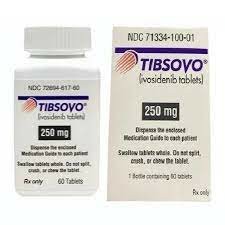
Ivonib reduces the level of 2-HG by inhibiting the activity of IDH1 mutations, thereby restoring normal gene expression and cell function. This not only helps induce cancer cell differentiation, but also helps enhance the immune system's response so that immune cells can more effectively recognize and eliminate cancer cells. In addition, the use of ivonib can also improve patient survival, especially in malignant tumors related to IDH1 mutations such as acute myeloid leukemia.
As an IDH1 inhibitor, ivonib can effectively inhibit the growth of cancer cells by specifically inhibiting IDH1 mutations, reducing the accumulation of 2-HG, and restoring normal metabolism and cell differentiation processes. It provides a new targeted treatment option for the treatment of tumors related to IDH1 mutations.
Reference link: https://www.tibsovo.com/
[ 免责声明 ] 本页面内容来自公开渠道(如FDA官网、Drugs官网、原研药厂官网等),仅供持有医疗专业资质的人员用于医学药学研究参考,不构成任何治疗建议或药品推荐。所涉药品可能未在中国大陆获批上市,不适用于中国境内销售和使用。如需治疗,请咨询正规医疗机构。本站不提供药品销售或代购服务。


