
.jpeg)
Introduction to the instructions and marketing status of irinotecan hydrochloride liposome injection (Onivyde)
1. Generic name: Irinotecan Hydrochloride Liposomal Injection
Product name: Onivyde, Yianda
Other Names:Irinotecan Hydrochloride Liposome Injection
2. Indications:
Irinotecan Hydrochloride Liposomal Injection (Onivyde) is suitable for the treatment of the following conditions:
1. It is suitable for first-line treatment of adult patients with metastatic pancreatic cancer in combination with oxaliplatin, fluorouracil and leucovorin.
2. In combination with fluorouracil and leucovorin (Fluorouracil and Leucovorin) for the treatment of adult patients with metastatic pancreatic cancer who have progressed after gemcitabine (Gemcitabine-) treatment.
Limitations of use: Irinotecan hydrochloride liposome injection cannot be used as a single drug for the treatment of patients with metastatic pancreatic cancer.
3. Usage and dosage:
1. Important usage information: Do not use irinotecan hydrochloride liposome injection as a substitute for other drugs containing irinotecan hydrochloride.
2. Recommended dosage
(1) Combination of oxaliplatin, fluorouracil and leucovorin for first-line treatment of metastatic pancreatic cancer:
Regardless ofUGT1A1*28 allele genotype, the recommended dose of irinotecan hydrochloride liposome injection is 50 mg/m2 as a 90-minute intravenous infusion every 2 weeks. There is no recommended dose of irinotecan hydrochloride liposome injection for patients with serum bilirubin above the upper limit of normal. Irinotecan hydrochloride liposomal injection was administered before oxaliplatin, fluorouracil, and leucovorin.
(2) In combination with fluorouracil and leucovorin for the treatment of patients with metastatic pancreatic cancer who have disease progression after gemcitabine-based therapy:
The recommended dosage of irinotecan hydrochloride liposome injection is70 mg/m2, intravenously infused over 90 minutes every 2 weeks. For patients known to be homozygous for the UGT1A1*28 allele, the recommended starting dose of irinotecan hydrochloride liposome injection is 50 mg/m2 intravenously infused over 90 minutes. The dose of irinotecan hydrochloride liposome injection was increased to 70 mg/m2 as the tolerated dose in subsequent cycles. There is no recommended dose of irinotecan hydrochloride liposome injection for patients with serum bilirubin above the upper limit of normal. Use irinotecan hydrochloride liposomal injection before fluorouracil and leucovorin.
3. Preoperative medication: Take corticosteroids and antiemetics 30 minutes before each infusion of irinotecan hydrochloride liposome injection.
4. Adverse reactions:
In clinical studies of irinotecan hydrochloride liposome injection, the most common adverse reactions include stomatitis, fever, diarrhea, nausea, vomiting, loss of appetite, fatigue, weakness, neutropenia, and anemia. The most common serious adverse reactions include diarrhea, nausea, vomiting and dehydration.
5. Supply and storage:
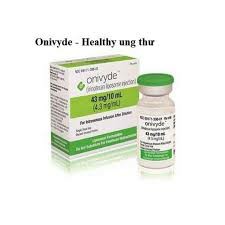
Irinotecan Hydrochloride Liposomal Injection is supplied in single-dose vials containing 43mg irinotecan free base at a concentration of 4.3mg/mL. Store 2°C to 8°C (36°F to 46°F). Do not freeze. Avoid light.
6. Taboo:
Irinotecan Hydrochloride Liposomal Injection is contraindicated in patients who have severe allergic reactions or anaphylaxis to Irinotecan Hydrochloride Liposomal Injection or Irinotecan Hydrochloride Liposomal Injection.
7. Mechanism of action:
Irinotecan liposome injection is a topoisomerase1 inhibitor encapsulated in lipid bilayer vesicles or liposomes. Topoisomerase 1 relieves torsional strain in DNA by inducing single-strand breaks. Irinotecan and its active metabolite SN-38 reversibly bind to topoisomerase 1-DNA complexes and prevent the religation of single-strand breaks, leading to exposure time-dependent double-stranded DNA damage and cell death. In mice bearing human tumor xenografts, liposomal irinotecan administered at a 5-fold lower irinotecan hydrochloride equivalent dose than irinotecan hydrochloride achieved similar intratumoral exposure of SN-38.
8. Listing situation:
Irinotecan Hydrochloride Liposomal InjectionYu2In October 2015, it was approved for marketing in the United States by the U.S. Food and Drug Administration. In January 2016, it was approved by the European Medicines Agency (EMA) for use in the EU, with the trade name Onivyde. In April 2022, the State Medical Products Administration approved the use of irinotecan hydrochloride liposome injection in China, with the trade name Onivyde.
Reference materials:https://dailymed.nlm.nih.gov/dailymed/drugInfo.cfm?setid=c8b58efa-1820-48a4-b70d-62918fc4abfc##
[ 免责声明 ] 本页面内容来自公开渠道(如FDA官网、Drugs官网、原研药厂官网等),仅供持有医疗专业资质的人员用于医学药学研究参考,不构成任何治疗建议或药品推荐。所涉药品可能未在中国大陆获批上市,不适用于中国境内销售和使用。如需治疗,请咨询正规医疗机构。本站不提供药品销售或代购服务。


