
.jpeg)
Detailed explanation of the therapeutic effect of kovalizumab
Crovalimab is a complement C5 inhibitor used in treatment1 Adults and children 3years and olderwith paroxysmal nocturnal hemoglobinuria(PNH)and weighing at least40kg. PNHis a rare and serious blood disorder that results in anemia, thrombosis, pancytopenia, and dark urine due to excessive hemolysis (rupture of red blood cells) .
Kovarizumab has clear indications and is suitable for PNH patients who are 13 years old and above and weigh at least 40kg. Kovalizumab offers a new treatment option for this patient population, particularly those who present with symptoms of hemolysis and high disease activity, as well as those who have been treated with other C5 inhibitors for at least 6 months and whose disease is stable.
From the perspective of efficacy, kovalizumab has demonstrated significant therapeutic effects. As a monoclonal antibody, it specifically binds to and inhibits the activity of the C5 complement protein. In PNH patients, an overactive complement system can lead to the destruction of red blood cells. By blocking this key link, kovalizumab effectively reduces the destruction of red blood cells, thereby alleviating the patient's hemolytic symptoms.
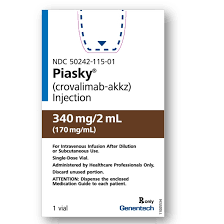
In a major study involving 204 adult patients with PNH who had not received prior complement inhibitor therapy, kovalizumab was as effective as eculizumab (another drug in PNH) at controlling hemolysis and reducing the need for transfusions. After 24 weeks of treatment with kovalizumab, blood levels of lactate dehydrogenase (LDH), which reflects the breakdown of red blood cells, showed that about 79% of patients taking the drug were able to control hemolysis. Among patients who receivedeculizumab treatment, this proportion was also around 79% , and the two performed equally well. But it is worth mentioning that A significant proportion of patients taking kovalizumab successfully controlled hemolysis and did not require frequent transfusions to maintain red blood cell levels.
Of course, as a drug, kovalizumab also has certain side effects. Common side effects include infusion-related reactions, viral infections, respiratory infections (including lung infections), and type III allergic reactions. Additionally, some patients may experience cold-like symptoms, such as pain or swelling in the nose or throat. But overall, most of these side effects can be controlled with appropriate medical intervention and management.
To sum up, kovalizumab, as an innovative therapeutic drug, provides a new treatment option for PNH patients. Its significant therapeutic effect and controllable side effects make it a treatment that has attracted much attention in clinical practice.
Reference link: https://www.accessdata.fda.gov/drugsatfda docs/label/2024/761388s000lbl.pdf
[ 免责声明 ] 本页面内容来自公开渠道(如FDA官网、Drugs官网、原研药厂官网等),仅供持有医疗专业资质的人员用于医学药学研究参考,不构成任何治疗建议或药品推荐。所涉药品可能未在中国大陆获批上市,不适用于中国境内销售和使用。如需治疗,请咨询正规医疗机构。本站不提供药品销售或代购服务。


