
.jpeg)
How effective is canafenib in treating colon cancer? Clinical research and efficacy analysis
Encorafenib is a targeted drug that mainly prevents the growth and spread of cancer cells by inhibiting the abnormal activity of BRAF mutant genes in tumor cells. Initially, canafenib was approved to treat patients with advanced melanoma, specifically those with the BRAF V600E mutation. However, with in-depth research on the mechanism of action of the drug, the indications of canafenib have gradually been expanded to other BRAF-mutant tumors, including colon cancer.
Colon cancer is a common malignant tumor of the digestive system, and approximately 8-10% of colon cancer patients have BRAF V600E mutations. BRAF V600E mutation can lead to excessive activation of BRAF protein, thereby promoting the proliferation and metastasis of tumor cells. Therefore, targeted therapy targeting BRAF mutations becomes a potentially effective therapeutic strategy. Canafenib, as a BRAF inhibitor, has shown certain clinical prospects in the treatment of colon cancer.
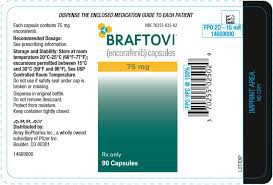
Clinical studies have shown that canafenib combined with other drugs (such asMEK inhibitor bemetinib) is more effective in patients with BRAF V600E mutant colon cancer. In an international multicenter clinical trial called BEACON CRC, researchers evaluated the efficacy of canafenib in combination with bemetinib in patients with metastatic BRAF V600E mutant colon cancer. The study showed that the objective response rate (ORR) of the combination treatment group was significantly higher than that of the traditional chemotherapy group, and the patient's survival was also prolonged. Especially in those patients who had failed previous chemotherapy, treatment with canafenib combined with bemetinib showed significant improvement in efficacy.
In this study, the combination therapy not only improved the tumor response rate, but also prolonged progression-free survival (PFS). This shows that for patients with BRAF V600E mutant colon cancer, the treatment regimen of canafenib combined with bemetinib can effectively overcome the resistance to single-agent chemotherapy and significantly improve the patient's quality of life.
In addition, the side effects of canafenib are relatively controllable. Common adverse reactions include fatigue, rash, diarrhea, and liver function damage. Most of these side effects are reversible and can be relieved after stopping the drug or reducing the dose. Through reasonable dose adjustment and monitoring of side effects, patients can better tolerate treatment.
Reference materials:https://www.braftovi.com/
[ 免责声明 ] 本页面内容来自公开渠道(如FDA官网、Drugs官网、原研药厂官网等),仅供持有医疗专业资质的人员用于医学药学研究参考,不构成任何治疗建议或药品推荐。所涉药品可能未在中国大陆获批上市,不适用于中国境内销售和使用。如需治疗,请咨询正规医疗机构。本站不提供药品销售或代购服务。


