
.jpeg)
What is the difference between dacomitinib and afatinib? What are the differences in treatment effects, side effects and indications between the two?
Dacomitinib and afatinib both belong to the second generation EGFR (epidermal growth factor receptor) Irreversible tyrosine kinase inhibitors (TKI) are mainly used for EGFR mutation-positive non-small cell lung cancer (NSCLC) patients. However, despite their similar mechanisms of action, there are still certain differences in therapeutic effects, side effects, and indications.
1. The difference between mechanism of action and indications
Both dacomitinib and afatinib can irreversibly inhibit the signaling pathways of the EGFR family (including EGFR/HER1, HER2 and HER4), thereby blocking the proliferation of cancer cells. However, dacomitinib has a broader and stronger inhibitory effect, and its ability to inhibit EGFR mutations is higher, which makes it potentially more effective than afatinib in some patients with EGFR mutations.
In terms of indications:
Afatinib has been approved for the first-line treatment of EGFRmutantNSCLC, and still has certain efficacy in some HER2mutant lung cancer and EGFR-TKI resistance. In addition, afatinib has also shown certain efficacy in patients with squamous cell lung cancer.
Dacomitinib Mainly used for EGFR mutation (L858R or 19 exon deletion)-positive advanced or metastatic NSCLC. Its efficacy has been shown to be better than afatinib in some studies.
2. Comparison of treatment effects
atARCHER 1050In clinical trials, dacomitinib was compared with the first-generation EGFR-TKIgefitinib (Gefitinib). The results showed that dacomitinib improved progression-free survival (PFS) and overall survival (OS) are better than gefitinib. For example, the PFS of dacomitinib reached 14.7 months, while that of gefitinib was only 9.2 months.
Clinical trials of afatinib (LUX-Lung 3 and LUX-Lung 6) have shown that it is more effective than chemotherapy, especially in patients with EGFR exon 19 deletion. However, compared with the third generation EGFR-TKI (such as osimertinib), its drug resistance problem is more obvious.
In general, dacomitinib's PFS in patients with EGFR mutations may be slightly longer than that of afatinib, but since both are second-generation TKIs, they may have similar efficacy in some cases.
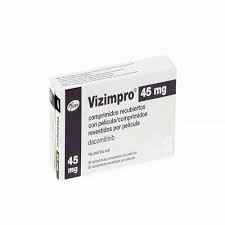
3. Comparison of side effects
Since both belong to the second generationEGFR-TKI, the types of side effects are roughly similar, but the severity is different:
Dacomitinib has more severe side effects, especially skin and gastrointestinal toxicity, including rash, diarrhea, stomatitis, onychomycosis, etc. In clinical trials, the incidence of grade 3 and above diarrhea in the dacomitinib group was higher, and some patients needed to adjust the dose or discontinue the drug.
The side effects of afatinib also mainly include diarrhea, rash, stomatitis, etc., but compared with dacomitinib, the incidence of skin toxicity and diarrhea is slightly lower. However, since afatinib is also irreversibleEGFR-TKI, patient tolerance still needs to be closely monitored.
4. Drug resistance and subsequent treatment
Since both dacomitinib and afatinib are second-generation EGFR-TKIs, after being used for a period of time, patients may develop drug resistance due to T790M mutations and other reasons.
After afatinib resistance, if the patient developsT790MMutation, you can ** switch to the third generation TKIOsimertinib (Osimertinib) ** for treatment.
After dacomitinib resistance, although osimertinib is still effective for some patients, due to the extensive inhibitory effect of dacomitinib on EGFR, some patients may be less sensitive to osimertinib, so subsequent treatment plans need to be adjusted individually.
Summary: How to choose?
For patients with previously treated EGFRmutatedNSCLC and pursuing longer progression-free survival, dacomitinib may be more suitable than afatinib.
For patients with poor side-effect tolerance, afatinib may be a better option because of its relatively mild gastrointestinal side effects.
If the patient subsequently considers using osimertinib, afatinib may be a safer choice, because resistance to dacomitinib may affect the efficacy of osimertinib.
For patients with HER2 mutations or squamous cell lung cancer, afatinib may be a more suitable option because it has relevant data to support these indications, while dacomitinib is not currently widely used in these areas.
In general, dacomitinib and afatinib each have their own advantages, and the specific choice should be determined based on the patient's mutation type, tolerance, and future treatment planning.
Reference materials:https://www.pfizer.com/products/product-detail/vizimpro
[ 免责声明 ] 本页面内容来自公开渠道(如FDA官网、Drugs官网、原研药厂官网等),仅供持有医疗专业资质的人员用于医学药学研究参考,不构成任何治疗建议或药品推荐。所涉药品可能未在中国大陆获批上市,不适用于中国境内销售和使用。如需治疗,请咨询正规医疗机构。本站不提供药品销售或代购服务。


