
.jpeg)
The application of rubicatin/rubitin in the treatment of small cell lung cancer: efficacy and prospects
Rubicatin/Lurbinectedin as a newRNA polymerase II inhibitor, has shown good application prospects in the treatment of small cell lung cancer (SCLC) . SCLC is a highly aggressive lung cancer, characterized by early spread, sensitivity to chemotherapy but easy recurrence. Due to the limited efficacy of traditional second-line treatments (such as topotecan), the emergence of rubicatin provides new hope for patients with recurrent SCLC.
Currently, rubicatin has received accelerated approval from the U.S. Food and Drug Administration (FDA) as a second-line treatment for SCLC. In the pivotal phase II clinical trial, the drug achieved an ORR of 35.2% and a disease control rate (DCR) of 68.6% in patients with recurrent SCLC, and had relatively fewer side effects compared to traditional regimens. Rubicatin was better tolerated than topotecan, and patients reported improved quality of life. However, the drug's efficacy is still limited by drug resistance, and some patients may still experience disease progression months after receiving treatment.
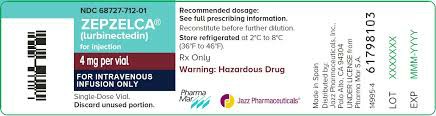
The clinical application of rubicatin is still expanding, and currently Phase III clinical trials (such as the ATLANTIS study) are evaluating its combination therapy with other chemotherapy drugs in order to further improve patient survival. In addition, the combination strategy of rubicatin and immunotherapy has also attracted much attention. Researchers believe that SCLC has a highly immunosuppressive tumor microenvironment, and rubicatin may improve the efficacy of PD-1/PD-L1 inhibitors (such as nivolumab and pembrolizumab) by enhancing the immune system's ability to recognize tumors.
In the future, rubicatin may not be limited to the second-line treatment of SCLC Its application in other refractory cancers (such as triple-negative breast cancer, metastatic soft tissue sarcoma) is also being explored. If further clinical data supports its efficacy, the drug could become a potential treatment option for multiple tumor types. With the continuous optimization of combination treatment strategies, rubicatin is expected to provide longer disease-free survival and improve overall prognosis for SCLC patients.
Reference materials:https://www.zepzelca.com/
[ 免责声明 ] 本页面内容来自公开渠道(如FDA官网、Drugs官网、原研药厂官网等),仅供持有医疗专业资质的人员用于医学药学研究参考,不构成任何治疗建议或药品推荐。所涉药品可能未在中国大陆获批上市,不适用于中国境内销售和使用。如需治疗,请咨询正规医疗机构。本站不提供药品销售或代购服务。


