
.jpeg)
Which generation of drug is entrectinib? How does it compare to other targeted drugs?
Entrectinib has obvious advantages over first- and second-generation TKI targeted drugs. First- and second-generation TKIs usually only target specific mutation types (such as EGFR or ALK mutations), while entrectinib is a broad-spectrum targeted drug that can simultaneously inhibit a variety of tumors with NTRK gene fusions. NTRK fusion genes occur in many different types of cancer, and these tumors are often difficult to control with traditional treatments. The broad-spectrum targeting effect of entrectinib gives it great advantages in the treatment of these specific tumors, especially in patients with large tumor heterogeneity.
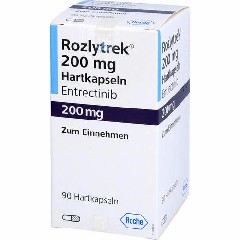
In terms of side effects, the side effects of entrectinib are relatively mild, and most side effects are reversible. Common side effects include fatigue, nausea, loss of appetite, and weight loss, but these are mild in most patients and can be managed with medication dose adjustments or symptomatic treatment. Compared with other targeted drugs, entrectinib has a lower incidence of side effects and is better tolerated by patients. In addition, entrectinib has shown long-term efficacy and drug resistance control in clinical trials, bringing more treatment hope to patients.
Reference: https://www.roche.com/products/rozlytrek
[ 免责声明 ] 本页面内容来自公开渠道(如FDA官网、Drugs官网、原研药厂官网等),仅供持有医疗专业资质的人员用于医学药学研究参考,不构成任何治疗建议或药品推荐。所涉药品可能未在中国大陆获批上市,不适用于中国境内销售和使用。如需治疗,请咨询正规医疗机构。本站不提供药品销售或代购服务。


