
.jpeg)
Excellent efficacy and safety of aceminib in first-line chronic myelogenous leukemia
ASC4FIRST Results from a 96-week follow-up of a Phase 3 study (NCT04971226) evaluating Asciminib as a first-line treatment for patients with chronic phase chronic myeloid leukemia (CP-CML) compared with investigator's choice of TKIs, including imatinib and second-generation TKIs.
The U.S. Food and Drug Administration (FDA) approvedaceminib in October 2024 for the treatment of newly diagnosed adult patients with Philadelphia chromosome-positiveCP-CML based on 48-week major molecular response (MMR) data from the ASC4FIRST trial.
Subsequent analysis96-week follow-up highlighted thatmolecular response rates with aceminibcontinued to improve over time, with significant superiority observed in both preliminary and exploratory comparisons. Notably, he reported that although the study did not compare with second-generation TKIs, aceminib appeared to show better efficacy in this subgroup, further strengthening its potential as a first-line treatment.
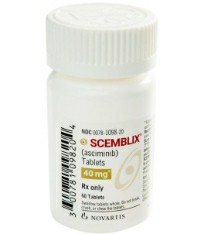
Data presented at the 2024 ASH Annual Meeting showed that the MMR rate at week 96 was still higher in patients treated with aximinib (n=201) than in patients treated with the investigator's choice of TKI. The 96-week MMR rates were 74.1% and 52.0% respectively, with a difference of 22.4% (95%CI, 13.6%-31.3%; P<0.001). This represents an increase in MMR, as the 48-week MMR rates were 67.7% and 49.0%, respectively, initially meeting the trial's primary endpoint.
Safety data showed that aximinib was well tolerated, with only 5% of patients discontinuing treatment due to adverse reactions (AEs), compared with 12.9% for imatinib and second-generation TKIs. Additionally, aceminib was associated with fewer grade 3 or 4 AEs, fewer dose reductions, and fewer treatment interruptions compared with other TKIs. Importantly, he stressed, the median daily dose of aceminib was 80 mg/day, reflecting its good tolerability.
The safety analysis also showed that aximinib had comparable or lower rates of overall and grade 3/4 adverse events compared with imatinib. These differences were even more pronounced when comparing Asiminib with second-generation TKIs, in which nearly all adverse events occurred less frequently with Asiminib, further underscoring its favorable risk-benefit.
Reference materials:https://www.onclive.com/view/dr-cortes-on-asciminib-s-superior-efficacy-and-safety-in-first-line-cml
[ 免责声明 ] 本页面内容来自公开渠道(如FDA官网、Drugs官网、原研药厂官网等),仅供持有医疗专业资质的人员用于医学药学研究参考,不构成任何治疗建议或药品推荐。所涉药品可能未在中国大陆获批上市,不适用于中国境内销售和使用。如需治疗,请咨询正规医疗机构。本站不提供药品销售或代购服务。


