
.jpeg)
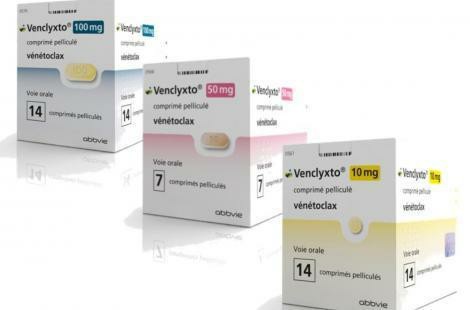
The CRISTALLO study of venetoclax/venetoclax/Obinutuzumab achieved excellent MRD in CLL
Based onCRISTALLO Data from a phase 3 trial (NCT04285567) of fludarabine, cyclophosphamide, and rituximab (FCR) or bendamustine plus rituximab (BR) in treatment-naïve chronic lymphocytic leukemia (CL) without 17p deletions or TP53 mutations L) The combination of venetoclax and obinutuzumab significantly increased the incidence of undetectable minimal residual disease (MRD) compared with patients.
At month 15, 81.3% of patients in the venetoclax and obinutuzumab arms achieved undetectable MRD at a sensitivity <10⁻⁴The positivity rate in peripheral blood was significantly higher than the 54.7% observed in the FCR/BR cohort (P=0.0004). Response depth extended to 10⁻8 and 10-6 Higher sensitivityMRD thresholds, the clearance rates in the obinutuzumab group were 76.3% and 63.8%, respectively, while the clearance rates in the FCR/BR patient cohort were 43.0% and 22.1%.
At the end of treatment, the negative rates of peripheral blood and bone marrow MRD in the venetuzumab and intravenous infusion groups were 81.3% and 70.0% respectively, while those in the FCR/BR group were 60.5% (P=0.0053) and 38.4% (P<0.0001). Due to the stratified testing procedure, the statistical significance of these end-of-treatment results could not be determined.
CRISTALLO is an open-label, international randomized trial enrolling patients with CLL requiring systemic therapy. Eligibility criteria included CIRS score ≤6 and creatinine clearance ≥70 mL/min, excluding 17p deletions or TP53 mutations. Patients were stratified according to Binet stage, IGHV mutation status, and age.
The primary endpoint of the trial is undetectable MRD in peripheral blood at 15 months. Secondary endpoints include progression-free survival (PFS), bone marrow MRD, overall response rate (ORR), duration of response (DOR), and overall survival (OS). Exploratory endpoints include deeper MRD thresholds.
PFS and OS data are still immature. At the time of data cutoff, the 2-year progression-free survival rate was 95.7% in the venetoclax/obinutuzumab arm and 90.4% in the FCR/BR arm. However, the difference was not statistically significant (HR, 0.49; 95% CI, 0.2-1.3; P=0.13). OS was also comparable, with the median OS in both groups not yet reached.
Adverse events (AEs) were consistent with the known safety profile of each drug. Infusion-related reactions occurred in 70.1% of patients in the venetoclax/obinutuzumab group and 42.4% in the FCR/BR group. In each group of patients, the infection rates of COVID-19 were 45.5% and 35.3%, thrombocytopenia was 39.0% and 21.2%, diarrhea was 35.1% and 12.9%, and nausea was 20.8% and 40.0%.
The incidence of laboratory TLS was 10.4% in patients treated with venetoclax and obinutuzumab compared with 2.4% in the FCR/BR group, but no clinical cases of TLS were reported. All TLS events occurred during obinutuzumab attenuation before the start of intravenous infusion.
The results of this study are consistent with those of the GAIA-CLL 13 trial (NCT02950051) and further support the transition to targeted therapies in first-line CLL management. Continued follow-up will clarify the durability of PFS and OS benefits.
References:https://www.targetedonc.com/view/cristallo-study-of-venetoclax-obinutuzumab-achieves-superior-mrd-in-cll
[ 免责声明 ] 本页面内容来自公开渠道(如FDA官网、Drugs官网、原研药厂官网等),仅供持有医疗专业资质的人员用于医学药学研究参考,不构成任何治疗建议或药品推荐。所涉药品可能未在中国大陆获批上市,不适用于中国境内销售和使用。如需治疗,请咨询正规医疗机构。本站不提供药品销售或代购服务。


