
.jpeg)
Is ivonib a targeted drug? How is its mechanism of action different from other targeted drugs?
Ivosidenib is a targeted drug that mainly targets tumors with mutations in the isocitrate dehydrogenase 1 (IDH1) gene. IDH1 mutations can lead to abnormal cell metabolism and continue to proliferate tumor cells, and ivonib inhibits the activity of IDH1 mutated enzymes , reduce the accumulation of harmful metabolites (2-Hydroxyglutarate, 2-HG), thereby restoring normal cell differentiation and inhibiting tumor growth. This mechanism of action makes ivonib an effective targeted drug for the treatment of specific cancers such as acute myeloid leukemia (AML) and cholangiocarcinoma.
Unlike other targeted drugs, ivonib does not act on traditional tyrosine kinases (TKI) or immune checkpoints, but on metabolic abnormalities related to IDH1 mutations. Compared with targeted drugs that act on signaling pathways such as EGFR, BRAF or ALK, ivonib mainly inhibits tumor progression by correcting metabolic disorders. This unique mechanism makes it a new treatment option for some patients with refractory tumors, especially for patients with IDH1 mutant AML and cholangiocarcinoma who are ineffective with conventional chemotherapy.
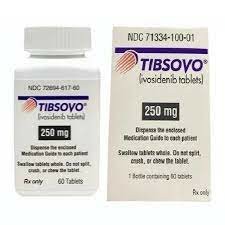
In addition, ivonib is relatively well tolerated, but may still cause specific side effects, such as differentiation syndrome, QT interval prolongation, nausea, fatigue, and abnormal liver function. Among them, differentiation syndrome is an adverse reaction that requires special attention when using IDH inhibitors. It may cause fever, dyspnea, hypotension and other symptoms. In severe cases, it is necessary to suspend or adjust the dose and use glucocorticoid treatment. Compared with traditional chemotherapy, the side effects of ivonib are more controllable, but doctors still need to closely monitor the patient's physical condition.
In general, ivonib, as a targeted drug targeting IDH1 mutations, provides new treatment options for patients with specific types of cancer. Its unique metabolic regulation mechanism allows it to show good efficacy in areas such as AML and cholangiocarcinoma, but it is not suitable for all cancer types. Therefore, patients need to undergo genetic testing before use to ensure that the IDH1 mutation is positive to improve the pertinence and effectiveness of the treatment. At the same time, regular follow-up during the treatment process is required to ensure safe medication.
[ 免责声明 ] 本页面内容来自公开渠道(如FDA官网、Drugs官网、原研药厂官网等),仅供持有医疗专业资质的人员用于医学药学研究参考,不构成任何治疗建议或药品推荐。所涉药品可能未在中国大陆获批上市,不适用于中国境内销售和使用。如需治疗,请咨询正规医疗机构。本站不提供药品销售或代购服务。


