
.jpeg)
Regorafenib provides modest survival benefit in refractory advanced gastric/GEJ cancer
Regorafenib improved overall survival (OS) compared with placebo in patients with refractory (refractory) advanced gastric cancer or gastroesophageal junction (GEJ), according to data from the phase 3 INTEGRATE IIa trial (NCT02773524). Results showed that at a median follow-up of 48 months, median OS was 4.5 months (95% CI, 4.0-5.5) for patients treated with regorafenib (n=169) compared with 4.0 months (95% CI, 3.1-4.6) for patients treated with placebo (n=82; HR, 0.68; 95% CI, 0.52-0.90; P=0.006).
FromINTEGRATE IIa and INTEGRATE Phase 2 Pooled data from the I trial (ACTRN12612000239864) showed that compared with the placebo group, the regorafenib treatment group (INTEGRATE I, n=100; INTEGRATE IIa, n=169 ) also had a statistically significant improvement in OS (INTEGRATEI, n=52; INTEGRATEIIa, n=82; HR, 0.70; 95%CI, 0.56-0.87; P=0.001). Additionally, the findings support regorafenib as a platform for combination studies, as seen in the recently reported first-line Phase 2 study of regorafenib in combination with nivolumab [Opdivo] and chemotherapy [NCT04757363] and the ongoing [Phase 3] INTEGRATE IIb study [NCT04879368].
INTEGRATE II was originally designed to evaluate the efficacy of regorafenib versus placebo; however, due to changes in clinical practice, the study was modified and divided into two parts: INTEGRATE IIa and INTEGRATE II/b. Patients participating in INTEGRATE IIa are receiving regorafenib versus placebo, and patients participating in INTEGRATE IIb with pretreated advanced gastric/GEJ are receiving regorafenib versus standard chemotherapy of the investigator's choice.
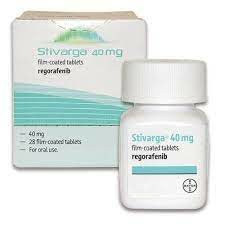
INTEGRATE IIa is a randomized, double-blind, international, placebo-controlled trial enrolling patients aged at least 18 years with GEJ or gastric metastasis or local recurrence, confirmed adenocarcinoma, or anaplastic carcinoma. For recurrent or metastatic disease, at least 2 prior therapies are required, including at least 1 platinum-based agent and a fluoropyrimidine analogue. Patients with HER2-positive disease require prior trastuzumab treatment. Other key inclusion criteria include evaluable disease according to RECIST 1.1 criteria, ECOG performance status of 0 or 1, and acceptable organ function. Patients were excluded if they had been previously treated with a small molecule VEGF TKI, such as rivarsanib; however, prior treatment with an anti-VEGF monoclonal antibody was allowed.
Investigators randomly assigned patients in a ratio of 2:1 to receive 160 mg of regorafenib or placebo orally once daily on days 1 to 21 of each 28-day cycle. Treatment was continued until disease progression or unacceptable toxicity. If dose level adjustment is required due to adverse effects (AEs), once-daily administration of 120 mg or 80 mg of regorafenib is allowed. No dose re-increase is allowed unless the patient requires a dose adjustment due to reversible palmoplantar erythrodysesthesia, hypertension, or deranged alanine aminotransferase (ALT) or aspartate aminotransferase levels. OS is the primary endpoint of the trial. Secondary endpoints include progression-free survival (PFS), objective response rate (ORR), health-related quality of life, safety and tolerability.
The median time since diagnosis was 24 months (IQR, 13-38) in the regorafenib group and 21 months (IQ, 14-29) in the placebo group; this information was unknown for 1 patient in the experimental group. At the primary site of cancer, 50% of patients in both arms underwent surgery. Forty-one percent of patients in the regorafenib group had received prior treatment with a VEGF inhibitor, compared with 43% in the placebo group. The proportions of patients who had received immunotherapy were 26% and 27% respectively. The median time from stopping the last immunotherapy to baseline was 7.2 months (IQR, 2.5-9.8) in the regorafenib group and 8.0 months (IQ, 1.7-11.9) in the placebo group.
Additional data showed no statistically significant differences in treatment effects among subgroups based on region or other prespecified subgroups. The OS benefit of regorafenib was consistent across prespecified subgroups. Median progression-free survival was 1.8 months (95% CI, 1.8-2.1) in the regorafenib group compared with 1.6 months (95% CI, 1.3-1.7) in the placebo group (HR, 0.53; 95% CI, 0.40-0.70; P<0.0001). The ORR was 2.4% in the regorafenib group and 0% in the placebo group. The disease control rates were 21.3% and 4.9% respectively. Quality of life data showed that the median time to worsening of overall quality of life was significantly longer in patients taking regorafenib compared with those taking placebo (HR, 0.68; 95% CI, 0.52-0.89; P=0.0043).
Regarding safety, 96% of patients in the regorafenib group (n=166) experienced adverse events of any grade compared with 87% of patients in the placebo group (n=79). In the experimental group, the incidence rates of grade 1/2, grade 3, grade 4 and grade 5 adverse events were 31%, 55%, 7% and 2% respectively; the corresponding rates in the placebo group were 47%, 37%, 4% and 0% respectively. The incidence of serious adverse events of any grade was 26% in the regorafenib group and 16% in the placebo group.
The 3 grade 5 adverse events reported in the regorafenib group included liver failure (n=1) that was considered to be related to the study treatment and sepsis (n=2) that was not considered to be related to the treatment. The most common identified adverse events reported in the regorafenib group included palmoplantar erythrodysesthesia, oral mucositis, diarrhea, hypertension, increased ALT levels, increased AST levels, and constipation.
Reference materials:https://www.onclive.com/view/regorafenib-provides-modest-survival-benefit-in-refractory-advanced-gastric-gej-cancer
[ 免责声明 ] 本页面内容来自公开渠道(如FDA官网、Drugs官网、原研药厂官网等),仅供持有医疗专业资质的人员用于医学药学研究参考,不构成任何治疗建议或药品推荐。所涉药品可能未在中国大陆获批上市,不适用于中国境内销售和使用。如需治疗,请咨询正规医疗机构。本站不提供药品销售或代购服务。


