
.jpeg)
Key contents of the Chinese instruction manual for Opicapone
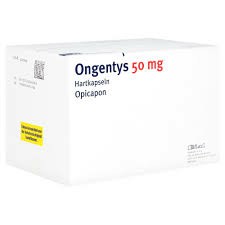
Opicapone , trade nameOngentys, is a new long-acting catechol-O-methyltransferase (COMT) inhibitor, mainly used for adjuvant treatment of patients with Parkinson’s disease (PD) to help reduce the “off” phenomenon (OFF phenomenon) caused by levodopa treatment. As part of the levodopa/carbidopa combination treatment regimen, opicapone can prolong the action time of levodopa and improve the utilization efficiency of dopamine, thereby improving the motor symptoms of patients with Parkinson's disease.
1. Indications
Opicapone is suitable for patients with Parkinson's disease who are receiving levodopa/carbidopa treatment but still experience the "off period" phenomenon (OFF phenomenon). Parkinson's disease is a neurodegenerative disease caused primarily by the progressive loss of dopaminergic neurons in the substantia nigra. Levodopa is currently the most effective therapeutic drug, but due to long-term use, drug efficacy may fluctuate (i.e., the concentration of the drug in the body is unstable), causing patients to still experience motor dysfunction, such as muscle stiffness, tremor, and bradykinesia after taking the drug.
Opicapone, as aCOMT inhibitor, can reduce the degradation of peripheral levodopa and maintain its concentration in the brain for a longer period of time, thereby improving the therapeutic effect, prolonging the "on period" (ON time) and reducing the "off period" (OFF time).
2. Usage and dosage
Recommended dose: The standard dose for adult patients is50 mg orally once daily at bedtime.
Dose administration time: Since the absorption of Opicapone may be affected by food, it is recommended to avoid eating 1 hour before taking the medication and at least 1 hour after taking the medication to ensure the best efficacy of the drug.
Patients with impaired hepatic function: For patients with moderate hepatic impairment (Child-Pugh score B), the recommended dose is adjusted to 25 mg once a day orally before bedtime. Because patients with severe hepatic impairment (Child-Pugh score C) may experience a decrease in drug metabolism and increase the risk of adverse reactions, the use of opicapone in patients with severe hepatic impairment is not recommended.
Elderly patients: Older patients usually do not require dose adjustment, but because the prevalence of Parkinson's disease is higher in the elderly group, and these patients may be accompanied by other chronic diseases or reduced liver and kidney function, adverse reactions should be closely monitored when using opicapone.
3. Pharmacological effects and mechanism of action
The main mechanism of action of Opicapone is to reduce the degradation of levodopa in peripheral tissues by inhibiting catechol-O-methyltransferase (COMT), thereby extending the half-life of levodopa, increasing its concentration in the brain, and making the effect of levodopa more stable.
4. Adverse reactions and precautions
Common adverse reactions of Opicapone in clinical trials and actual patient use include:
Movement disorders (such as dyskinesia): Because opicapone enhances the effect of levodopa and may cause involuntary movements in patients, the dose of levodopa needs to be adjusted appropriately.
Gastrointestinal discomfort (such as nausea, vomiting, constipation or diarrhea): It is recommended that patients adjust their diet or drug dosage under the guidance of a doctor.
Insomnia: Some patients may experience sleep problems after taking Opicapone, so it is recommended to take it before bed to reduce the effects.
Psychiatric symptoms (such as hallucinations, anxiety or depression): Some patients may experience central nervous system side effects, especially those with a history of mental illness, and need to closely observe changes in their condition.
Hypotension or Hypertension: Opicapone may affect blood pressure regulation, especially in patients receiving concomitant antihypertensive agents and should be monitored for changes in blood pressure.
Contraindications: Opicapone is contraindicated in patients with severe hepatic impairment, hypersensitivity to components of the drug, and patients with pheochromocytoma or paraganglioma (due to possible hypertensive crisis).
Reference materials:https://www.ongentys.com/
[ 免责声明 ] 本页面内容来自公开渠道(如FDA官网、Drugs官网、原研药厂官网等),仅供持有医疗专业资质的人员用于医学药学研究参考,不构成任何治疗建议或药品推荐。所涉药品可能未在中国大陆获批上市,不适用于中国境内销售和使用。如需治疗,请咨询正规医疗机构。本站不提供药品销售或代购服务。


