
.jpeg)
What are the recommended uses and dosages of fenelinone?
The recommended usage and dosage of finerenone need to be individually adjusted based on the patient's renal function status to ensure efficacy while reducing the risk of side effects. For patients with differenteGFR (estimated glomerular filtration rate) levels, dose adjustments are as follows:
1. Starting dose
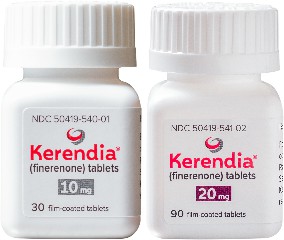
Patients with eGFR≥60mL/min/1.73m²: The recommended starting dose is 20mg, taken orally once daily.
Patients with eGFR between 25-59mL/min/1.73m²: It is recommended that the starting dose be reduced to 10mg, taken orally once daily.
Patients with eGFR <25mL/min/1.73m²: The use of fenelidone is currently not recommended due to the lack of sufficient clinical data to support its safety and efficacy.
2. Maintenance dose
After taking it for 4 weeksThe patient’s serum potassium level needs to be monitored and the dose adjusted based on the results:
Serum potassium≤4.8mEq/L: If the starting dose is 10mg, it can be increased to 20mg; if the starting dose is 20mg, continue to maintain.
Serum potassiumBetween 4.8-5.5mEq/L: No dose adjustment is required, continue to maintain the current dose.
Serum potassium>5.5mEq/L: Medication should be suspended and restarting 10 mg after the serum potassium level drops below 5.0 mEq/L.
3. Precautions when taking medicine
This drug is taken orally once a day and is not affected by food, but it should be taken at the same time as possible to maintain a stable blood concentration.
Serum potassium levels need to be monitored regularly during treatment, especially before starting treatmentAfter 4 weeks and dose adjustment, ensure that the patient's serum potassium is maintained within a safe range.
Since fenelidone is mainly metabolized by CYP3A4, combination with strong CYP3A4 inhibitors (such as ketoconazole, itraconazole, clarithromycin) should be avoided to avoid increasing blood concentration and causing adverse reactions.
Compared with traditional aldosterone antagonists (such as spironolactone and eplerenone), fenelinone has the advantage of high selectivity, making its application in T2D patients combined with CKD safer and more effective. However, serum potassium levels still need to be closely monitored, especially in patients receiving concomitant RAAS inhibitors (ACE inhibitors or ARBs), to prevent the development of hyperkalemia.
Reference materials:https://www.kerendia.com/
[ 免责声明 ] 本页面内容来自公开渠道(如FDA官网、Drugs官网、原研药厂官网等),仅供持有医疗专业资质的人员用于医学药学研究参考,不构成任何治疗建议或药品推荐。所涉药品可能未在中国大陆获批上市,不适用于中国境内销售和使用。如需治疗,请咨询正规医疗机构。本站不提供药品销售或代购服务。


