
.jpeg)
The difference between midostaurin and giritinib: analysis of mechanism of action, indications and efficacy
Midostaurin (Midostaurin) and Gilteritinib (Gilteritinib) are both tyrosine kinase inhibitors (TKIs), mainly used to treat acute myeloid leukemia (AML) carrying FLT3 mutations. Although both target FLT3 mutations, there are still significant differences in their mechanisms of action, indications, treatment stages, and efficacy. Reasonable selection of appropriate drugs is of great significance to improving treatment effects and patient prognosis.
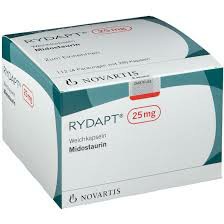
Midostaurin is a multi-target tyrosine kinase inhibitor that can inhibitFLT3-ITD and FLT3-TKD mutations. It can also act on multiple receptors such as KIT, PDGFR, and VEGFR. Due to its multi-target effect, midostaurin is not only suitable for AML patients with FLT3 mutations, but also has certain curative effects on some patients with systemic mastocytosis (SM). In the treatment of AML, midostaurin is mainly used in combination with the standard 7+3 chemotherapy regimen (cytarabine + daunorubicin) and continues as maintenance treatment after remission to suppress residual disease and prolong disease-free survival. Its treatment strategy emphasizes combination chemotherapy and is suitable for newly diagnosed FLT3-mutated AML patients, rather than relapsed or refractory cases.
Giritinib is a more selectiveFLT3 inhibitor that mainly acts on FLT3-ITD and FLT3-TKD (D835) mutations, but its target is relatively narrow and its inhibitory effect on other tyrosine kinases is weak. The clinical application of giritinib is mainly aimed at patients with relapsed or refractory FLT3-mutated AML. Such patients are resistant to chemotherapy and usually require more effective and targeted treatments. Giritinib alone can be used to treat relapsed/refractory AML. Clinical studies have shown that compared with standard chemotherapy, giritinib can significantly improve the complete response rate (CR) and survival time of patients, and its toxicity is relatively controllable, making it the drug of choice for the second-line treatment of FLT3-mutated AML.
In terms of efficacy, midostaurin has a more obvious long-term survival benefit in patients with newly diagnosed AML, while giritinib has a better response rate in patients with relapsed/refractory AML. Studies have shown that the 5-year survival rate of midostaurin combined with chemotherapy is about 10% higher than that of chemotherapy alone, while giritinib can increase the complete response rate to about 21% in second-line treatment, which is significantly better than traditional salvage chemotherapy. The single-agent oral administration mode of giritinib also provides patients with a more convenient treatment option.
In terms of adverse reactions, midostaurin may cause nausea, vomiting, diarrhea, rash and other symptoms due to its wide range of action targetsSide effects such as QT interval prolongation, while the main adverse reactions of gilitinib include hypertension, abnormal liver function, increased creatinine, and differentiation syndrome (DS). The latter may lead to rapidly rising white blood cell levels and severe systemic inflammatory reactions, requiring close monitoring and timely intervention.
In general, midostaurin is suitable for newly diagnosed patients with FLT3 mutated AML and needs to be used in combination with chemotherapy, while giritinib is mainly used for patients with relapsed or refractory FLT3 mutated AML and can be used as a single drug, with clearer efficacy and more convenient administration. When choosing a treatment plan, doctors need to consider the patient's condition, mutation type and tolerance to formulate an individualized and precise treatment strategy to improve the long-term survival rate of AML patients.
Reference materials:https://everyone.org/explore/compare?id1=16&id2=477
[ 免责声明 ] 本页面内容来自公开渠道(如FDA官网、Drugs官网、原研药厂官网等),仅供持有医疗专业资质的人员用于医学药学研究参考,不构成任何治疗建议或药品推荐。所涉药品可能未在中国大陆获批上市,不适用于中国境内销售和使用。如需治疗,请咨询正规医疗机构。本站不提供药品销售或代购服务。


