
.jpeg)
Detailed instructions for dabrafenib/dabrafenib: indications, usage, dosage and precautions
Dabrafenib/Dabrafenib is a BRAF inhibitor targeted drug, mainly used to treat a variety of malignant tumors with positive BRAF V600 mutations, including melanoma, non-small cell lung cancer (NSCLC), anaplastic thyroid cancer, and certain pediatric solid tumors and low-grade glioma (LGG). As an efficient and precise anti-cancer drug, dabrafenib has demonstrated remarkable efficacy in clinical applications. This article will provide you with a detailed analysis of the usage guidelines of dabrafenib in terms of indications, usage and dosage, side effects and precautions, etc., to help patients better understand this drug.
1. Indications
Dabrafenib is mainly used for the following diseases:
1. Unresectable or metastaticBRAF V600E mutation melanoma: Dabrafenib alone or in combination with trametinib can significantly extend the progression-free survival (PFS) and overall survival (OS) of patients.
2. Adjuvant therapy for melanoma patients with BRAF V600E or V600K mutations that involve lymph nodes after complete resection: combination with trametinib can reduce the risk of recurrence.
3. Metastatic non-small cell lung cancer (NSCLC) with BRAF V600E mutation: Combination with trametinib can effectively inhibit tumor progression and improve patients' quality of life.
4. Local progression or metastasisBRAF V600E mutated anaplastic thyroid cancer: used for patients without satisfactory local treatment options.
5. Unresectable or metastatic solid tumors with BRAF V600E mutations: Applicable to adults and pediatric patients aged 6 years and above, especially those who have failed previous treatments or have no alternative.
6. Low-grade glioma (LGG) with BRAF V600E mutation 1 year old and above: for pediatric patients who require systemic therapy.
It should be noted that dabrafenib is not indicated for the treatment of patients with wild-type BRAF melanoma, wild-type BRAF NSCLC, or wild-type BRAF anaplastic thyroid cancer.
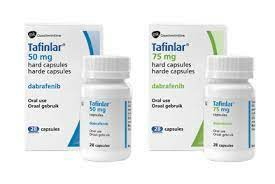
2. Usage and dosage
The recommended dose of dabrafenib is150mg, taken orally twice daily (approximately 12 hours apart). Capsules should be taken 1 hour before or 2 hours after meals to ensure optimal absorption. Common specifications include 50mg and 75mg capsules, and each box usually contains 60 or 120 capsules to meet the patient's medication needs for a month. If the patient misses a dose, he should take it as soon as he remembers. However, if the next dose is less than 6 hours away, skip the missed dose and avoid doubling the dose.
3. Side effects and management
Common side effects of dabrafenib include fever, rash, headache, joint pain, and fatigue. Most side effects are mild to moderate and can be relieved with symptomatic treatment. For example, patients with fever can use antipyretic drugs (such as acetaminophen) and increase fluid intake; patients with rash can use moisturizing skin care products or topical medications. However, some patients may develop serious side effects, such as cardiomyopathy, retinal vein occlusion, or new skin cancer, which require regular monitoring and prompt management.
4. Precautions
1. Medication monitoring: Patients should undergo regular blood routine, liver function and electrocardiogram examinations during the use of dabrafenib to monitor the efficacy and safety of the drug. For melanoma patients, regular skin examinations are also required to detect new skin cancers early.
2. Drug interactions: Dabrafenib may interact with other drugs, affecting their efficacy or increasing the risk of side effects. For example, coadministration with strong CYP3A4 inhibitors (such as ketoconazole) may increase the plasma concentration of dabrafiline, while coadministration with strong CYP3A4 inducers (such as rifampicin) may decrease its plasma concentration. Therefore, patients should inform their doctors about all medications they are taking while taking dabrafenib, including prescription drugs, over-the-counter drugs, and herbal preparations.
3. Medication for special groups: Pregnant women, lactating women and patients with liver dysfunction should use dabrafenib with caution. They should decide whether to use dabrafenib after weighing the pros and cons under the guidance of a doctor. .
Reference materials:https://go.drugbank.com/drugs/DB08912
[ 免责声明 ] 本页面内容来自公开渠道(如FDA官网、Drugs官网、原研药厂官网等),仅供持有医疗专业资质的人员用于医学药学研究参考,不构成任何治疗建议或药品推荐。所涉药品可能未在中国大陆获批上市,不适用于中国境内销售和使用。如需治疗,请咨询正规医疗机构。本站不提供药品销售或代购服务。


