
.jpeg)
How effective is the anticancer drug midostaurin? Key information patients need to know
Midostaurin (Midostaurin, trade name RYDAPT, is a multi-target kinase inhibitor mainly used to treat FLT3 mutation-positive acute myeloid leukemia (AML) and systemic mastocytosis (SM). One of the biggest concerns many patients have when considering midostaurin is how effective it will be. This article will explain to you the efficacy of midostaurin and its importance in anti-cancer treatment from the perspective of clinical research and practical application.
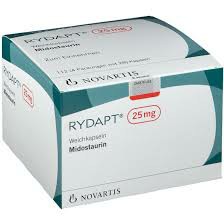
For patients with FLT3 mutation-positive acute myeloid leukemia (AML), midostaurin combined with standard chemotherapy (cytarabine and daunorubicin) can significantly improve the therapeutic effect. Clinical studies have shown that compared with chemotherapy alone, midostaurin combination therapy can significantly prolong the disease-free survival (DFS) and overall survival (OS) of patients. For example, a pivotal phase III clinical trial showed that the median overall survival in the midostaurin plus chemotherapy group was 74.7 months, compared with only 25.6 months in the chemotherapy alone group. This data suggests that midostaurin provides a significant survival benefit for patients with AML, particularly those with FLT3 mutation-positive disease.
Midostaurin has also shown significant efficacy in the treatment of systemic mastocytosis (SM). SM includes aggressive systemic mastocytosis (ASM), systemic mastocytosis with associated hematological neoplasms (SM-AHN), and mast cell leukemia (MCL). Midostaurin effectively controls the abnormal proliferation of mast cells and improves patients' symptoms and quality of life by inhibiting KIT gene mutations. Clinical studies have shown that the overall response rate (ORR) of midostaurin in the treatment of SM can reach more than 60%, and some patients even achieve complete response (CR).
Although midostaurin has significant efficacy, patients still need to pay attention to its possible side effects during use, such as nausea, vomiting, diarrhea, and fatigue. Most side effects are mild to moderate and can be relieved with symptomatic treatment. However, some patients may experience serious side effects, such as interstitial lung disease (ILD) or QT interval prolongation, which require regular monitoring and prompt treatment.
Reference materials:https://medlineplus.gov/druginfo/meds/a617033.html
[ 免责声明 ] 本页面内容来自公开渠道(如FDA官网、Drugs官网、原研药厂官网等),仅供持有医疗专业资质的人员用于医学药学研究参考,不构成任何治疗建议或药品推荐。所涉药品可能未在中国大陆获批上市,不适用于中国境内销售和使用。如需治疗,请咨询正规医疗机构。本站不提供药品销售或代购服务。


