
.jpeg)
Does evantuzumab need to be taken with other medications?
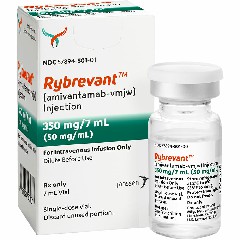
Amivantumab (trade name Rybrevant) is a bispecific antibody targeting the EGFR-MET receptor. It is mainly used to treat EGFR exon 20 insertion mutations (EGFR Exon 20ins) non-small cell lung cancer (NSCLC) patients. The drug has shown good efficacy in monotherapy, but in actual clinical application, the strategy of combined treatment with other drugs is being widely studied in order to improve the efficacy, delay the occurrence of drug resistance, and improve the survival prognosis of patients.
Evantumumab monotherapy profile
Currently, evantumumab is approved as a single agent by the FDA for the treatment of EGFR Exon 20insmutated NSCLC that has progressed after prior platinum-containing chemotherapy. In the pivotal clinical trial CHRYSALIS , monotherapy achieved an overall response rate (ORR) of 40% and a median progression-free survival (PFS) of approximately 8.3 months, making it an important treatment option for EGFR Exon 20insmutated NSCLC patients.
However, despite the efficacy of single-agent therapy, some patients may still develop drug resistance or insufficient efficacy. Therefore, an increasing number of studies are exploring combination regimens of evantumumab with other drugs to improve efficacy and prolong survival.
Combination strategy of evantumumab
1. Combined chemotherapy (platinum+pemetrexed)
Joint background: Chemotherapy remains one of the standard treatment options in EGFR Exon 20insmutatedNSCLC. Studies have shown that the combination of evantumumab with platinum + pemetrexed may enhance efficacy, improve response rates and prolong survival.
Clinical Data (PAPILLON Study): PAPILLON IIIA phase 1 study evaluated the efficacy of evantumumab combined with chemotherapy (pemetrexed+carboplatin/cisplatin). Compared with chemotherapy alone, the combination treatment group Progression-free survival (PFS) and overall survival (OS) were significantly improved.
This combination is expected to become the first-line treatment option for EGFR Exon 20insmutationsNSCLC in the future.
Recommended indications: First-line treatmentEGFR Exon 20insMutationNSCLC (may become a standard regimen in the future).
Patients who have failed previous platinum-based chemotherapy can try a combination chemotherapy strategy.
2. CombinedEGFR-TKI (osimertinib, etc.)
Joint background: Osimertinib is a third-generation EGFR-TKI targeting EGFR L858R, 19del, T790M mutations have good efficacy, but the EGFR Exon 20ins mutation has a poor effect.
Research has found that evantumumab combined with osimertinib can enhance EGFR signal inhibition and overcome some EGFR-TKI resistance, which is especially suitable for Patients with METamplification and EGFR-TKI resistance.
Clinical data: The CHRYSALIS-2 study found that the combination regimen of evantumumab + osimertinib showed good efficacy in patients with EGFR-TKI resistance. Better anti-tumor activity, especially against the resistance mechanism of MET amplification.
Recommended indications: Patients who have progressed after resistance to EGFR TKI (such as osimertinib) (especially those with MET amplification).
Patients who cannot receive chemotherapy alone or who have failed chemotherapy.
3. Combined with MET inhibitors (Capmatinib, Tepotinib)
Joint background: Some EGFR Exon 20ins mutated NSCLC patients will have MET gene amplification at the same time, leading to drug resistance or treatment failure.
MET inhibitors (e.g., Capmatinib, Tepotinib) can enhance MET signaling inhibition, so combined use with evantumumab may provide stronger anti-tumor effects.
Clinical data: Early-stage studies have shown that the combination of evantumumab + MET inhibitors showed promising anti-tumor activity in patients with MET amplification.
Recommended indications
Patients with METamplification of EGFR Exon 20ins mutations can try to combine MET inhibitors.
After EGFR TKI resistance, patients develop MET related resistance.
4. CombinedPD-1/PD-L1Immune checkpoint inhibitor
Combination background: EGFRmutatedNSCLCgenerally has a low single-agent response to PD-1/PD-L1 inhibitors, but combination therapy may produce synergistic effects.
Research is exploring evantumumab combination PD-1/PD-L1The potential of inhibitors (eg, pembrolizumab, nivolumab).
Clinical data (currently still in the research stage): Early data show that evantumumab + immunotherapy may have certain efficacy in patients with high PD-L1 expression, but further research is needed.
Recommended indications
PD-L1Highly expressedEGFR Exon 20ins mutation patients.
Patients who failed previous chemotherapy+try combination immunotherapy.
Evantumumab has shown good efficacy in EGFR Exon 20insmutationsNSCLC, but monotherapy still has limitations, so combination therapy has become the future development direction. The current main joint strategies include:
Combination chemotherapy (pemetrexed+platinum) - may become the first-line standard regimen in the future.
CombinedEGFR-TKI (such as osimertinib) - for EGFR TKI resistant patients, especially those with MET amplification.
CombinedMET inhibitors (Capmatinib, Tepotinib) - suitable for patients with MET amplification.
CombinedPD-1/PD-L1immunotherapy - for patients with high PD-L1 expression, it is still in the research stage.
With the deepening of clinical research, the combination regimen of evantumumab is expected to improve efficacy, overcome drug resistance, and improve patient survival. For EGFR Exon 20ins mutated NSCLC patients, personalized and combined treatment strategies may become mainstream in the future to further optimize treatment effects.
xa0
Reference materials:https://www.rybrevant.com/
[ 免责声明 ] 本页面内容来自公开渠道(如FDA官网、Drugs官网、原研药厂官网等),仅供持有医疗专业资质的人员用于医学药学研究参考,不构成任何治疗建议或药品推荐。所涉药品可能未在中国大陆获批上市,不适用于中国境内销售和使用。如需治疗,请咨询正规医疗机构。本站不提供药品销售或代购服务。


