
.jpeg)
Cabozantinib combined with Nivolumab/Ipilimumab maintains PFS benefit in advanced RCC
Based on final analysis of data from the Phase 3 COSMIC-313 trial (NCT03937219) presented at the 2025 Genitourinary Cancers Symposium, compared with placebo Nivolumab and Ipilimumab Cabozantinib combined with nivolumab and ipilimumab showed sustained progression-free survival (PFS) benefit compared with ipilimumab in patients with advanced renal cell carcinoma (RCC).
At 45 months of follow-up, updated PFS in the intention-to-treat population was 16.6 months (95% CI, 14.0-22.6) in the combination arm and 11.2 months in the placebo arm (95%CI, 9.3-14.0)(HR, 0.82; 95%CI, 0.69-0.98). Overall survival (OS) was 41.9 months (95% CI, 34.8-47.9) in the cabozantinib group and 42.0 months (95% CI, 34.9-53.1) in the placebo group (HR, 1.02; 95% CI, 0.85-1.23; P=0.8366).
According to the International Metastatic Renal Cell Carcinoma Database Consortium (IMDC), disease-free survival in the intermediate-risk group was 22.1 months (95% CI, 14.1-25.3) in the cabozantinib group and 11.3 months (95% CI, 8.3) in the placebo group. 3-16.7) (HR, 0.76; 95% CI, 0.62-0.93); for the low-risk group, the results were 9.5 months (95% CI, 8.2-15.8) and 11.2 months (95% CI, 6.0-21.6) (HR, 1.04; 95% CI, 0.73-1.48). OS in the intermediate arm was 47.9 months (95% CI, 42.6-51.6) in the cabozantinib group and 48.0 months (95% CI, 42.0-not estimable [NE]) in the placebo group (HR, 0.99; 95% CI, 0 .79-1.24); for the low-risk group, the differences between the two groups were 19.4 months (95% CI, 15.8-29.3) and 24.0 months (95% CI, 16.3-30.9) (HR, 1.09; 95% CI, 0.78-1.51). There were no significant differences in OS between the two groups in the ITT population or IMDC risk group.
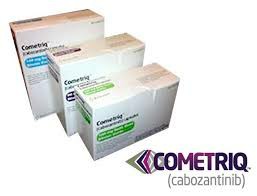
Overall,428 patients were enrolled in the cabozantinib group and 427 patients were enrolled in the placebo group. Cabozantinib orally daily 40 mg, and nivolumab intravenously every 3 weeks, totalFor 4 cycles, 1 mg/kg ipilimumab was administered intravenously every 3 weeks for a total of 4 cycles. Patients can then transition to maintenance therapy with cabozantinib 40 mg orally daily plus intravenous nivolumab every 4 weeks. In the placebo group, patients received matching treatment. The primary endpoint was RECIST v1.1 PFS (per blinded independent review committee) in the first 550 randomized patients after event 249. The secondary endpoint was OS after 433 events among all randomized patients.
In the cabozantinib group, 373 patients discontinued all study treatments, compared with 361 in the placebo group, for reasons including disease progression (40% and 44%, respectively), adverse events (AEs) not related to disease progression (29% and 21%), and AEs related to disease progression (5% and 9%). Baseline characteristics were well balanced between the two groups. In the cabozantinib group, 75% of patients were stratified as intermediate risk, 75% in the placebo group, and 25% as low risk.
Overall, the majority of patients had received 1 or more prior systemic anticancer therapies between the cabozantinib and placebo groups (50% vs. 49%). The median time to first systemic non-protocol therapy was 14.5 months instead of 9.7 months. The most common types of subsequent therapy were VEGFR tyrosine kinase inhibitors (36% vs. 41%), PD-1/PD-L1 inhibitors (11% vs. 12%), mTOR inhibitors (13% vs. 6%), and HIF2α inhibitors (0.2% vs. 0.7%).
Treatment exposure and adverse events did not differ significantly from previously reported analyses. However, the median mean daily dose of cabozantinib was 22.4 mg compared with 35.2 mg for placebo. In the combination treatment group, the dosing cycles of ipilimumab were 7 times in the first line, 22 times in the second line, 13 times in the third line, and 58 times in the fourth line, while in the placebo group, the administration cycles were 6 times in the first line and 7 times in the second line. Treatment-related adverse events leading to discontinuation were 49% and 26%, respectively. The most common grade 3/4 treatment-related adverse events were increased alanine aminotransferase (26% vs. 6%), increased aspartate aminotransferase (19% vs. 5%), diarrhea (5% vs. 3%), and palmoplantar red paresthesia syndrome (4% vs. 0%).
398 patients underwent RNA sequencing of tumor samples and deconvoluted them into molecular clusters or immune cells. From there, they either do characterization/validation or a random forest model. Seven molecular subpopulations were discovered in unsupervised transcriptome analysis. Overall, no clear molecular clusters associated with clinical outcomes were observed, but the sample sizes for each cluster were small.
Regarding deconvolution, when different immune types were evaluated, M2-like macrophages were the best predictor of OS. These promote tumor growth, invasion, and metastasis as they suppress immune responses and are associated with poor prognosis in different cancers. If patients were at low risk for IMDC or developed visceral metastases, they showed higher levels of M2-like macrophages.
Discovered that cabozantinib combination overcomesM2-like macrophage-mediated tumor response. For M2-like low, median progression-free survival was 22.1 months (95% CI 11.4-30.6) in the cabozantinib group compared with 16.7 months in the placebo group (9 5%CI: 12.0-25.0) (HR, 0.89; 95%CI: 0.66-1.20; P=0.44). M2-high median progression-free survival was 10.1 months (95% CI, 9.23-NE) in the combination group and 5.95 months (95% CI, 3.81-12.0) in the placebo group (HR, 0.48; 95% CI, 0.29-0.81; P=0.0058). In addition, the median OS for M2-like low patients was 47.8 months (95% CI, 36.8-NE) in the cabozantinib group compared with NE (5% CI, NE-NE) in the placebo group (HR, 1.2; 95% CI, 0.88-1.70; P=0.23). For M2-like height, median OS was 39.9 months (95% CI, 31.4-NE) in the cabozantinib group compared with 23.0 months (95% CI, 13.4-35.0) in the placebo group (HR, 0.51; 95% CI, 0.31-0.86; P=0.012).
References:https://www.onclive.com/view/cabozantinib-plus-nivolumab-ipilimumab-sustains-pfs-benefit-in-advanced-rcc
[ 免责声明 ] 本页面内容来自公开渠道(如FDA官网、Drugs官网、原研药厂官网等),仅供持有医疗专业资质的人员用于医学药学研究参考,不构成任何治疗建议或药品推荐。所涉药品可能未在中国大陆获批上市,不适用于中国境内销售和使用。如需治疗,请咨询正规医疗机构。本站不提供药品销售或代购服务。


