
.jpeg)
Full analysis of trametinib (Megenin) precision treatment: indications and medication guidelines from lung cancer to childhood brain tumors
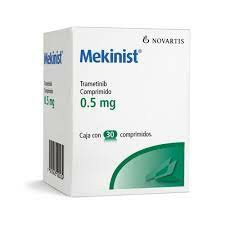
Trametinib (trade name: Mekinist, English name: Trametinib/Mekinist) is a MEK1/2 inhibitor that inhibits tumor growth by blocking the RAS-RAF-MEK-ERK signaling pathway. It is a precision treatment drug for cancers related to BRAF V600 mutations. The following is a comprehensive analysis of its clinical application from indications, usage, precautions and other dimensions.
1. Indications cover multiple cancer types: from adult melanoma to childhood brain tumors
1. Advanced solid tumors in adults
(1) Melanoma: Single drug or combination with dabrafenib for the treatment of unresectable or metastatic melanoma with BRAF V600E/K mutation, and adjuvant treatment for patients with postoperative lymph node involvement, significantly reducing the risk of recurrence.
(2) Non-small cell lung cancer (NSCLC): For metastatic lung cancer with BRAF V600E mutation, combination with dabrafenib can improve the objective response rate (ORR 63.9%-68.4%).
(3) Anaplastic thyroid cancer (ATC): used for advanced patients with BRAF V600E mutation and no effective local treatment to extend survival.
2. Children’s solid tumors and brain tumors
(1) Low-grade glioma (LGG): used in patients with BRAF V600E mutation over 1 year old who require systemic therapy to control tumor progression1.
(2) Other solid tumors: children over 6 years old and adults with BRAF V600E mutated solid tumors, suitable for those who have failed previous treatments and have no alternative.
2. Usage and dosage: Fixed dose for adults, children need to adjust according to body weight.
1. Standard plan for adults
(1) Monotherapy: Take 2 mg (1 tablet) orally daily on an empty stomach (1 hour before a meal or 2 hours after a meal).
(2) Combined with dabrafenib: trametinib 2 mg once a day + dabrafenib 150 mg twice a day. Side effects of the combination must be strictly monitored.
2. Individualized dosage for children
(1) Body weight ≥26kg: 2mg once daily;
(2) Body weight <26kg: calculated as 0.025mg/kg, with a maximum of 2mg.
Weight changes need to be regularly assessed and dosage adjusted to ensure a balance between efficacy and safety.
3. Adverse reaction management: from common symptoms to severe toxicity
1. Common side effects (≥20%)
Monotherapy: rash (mainly sicca dermatitis), diarrhea, lymphedema.
Combined treatment: fever (27.3%), chills, fatigue, nausea and vomiting, headache and joint pain.
2. Early warning of serious complications
Interstitial lung disease (ILD): The incidence is about 1.8%, manifested by dyspnea or cough, requiring permanent discontinuation of medication.
Cardiotoxicity:QT interval prolongation, left ventricular ejection fraction decrease, regular electrocardiogram monitoring is required.
Venous thromboembolism: The risk is increased when combined with dabrafenib, especially in patients with a history of thrombosis.
3. Precautions for special groups of people
Fertility effects: May damage fertility, contraception is required during use.
Hepatic and renal insufficiency: No dose adjustment is required for mild to moderate impairment. Data for severe patients are limited, so caution is required8.
4. Medication contraindications and interactions: the key to avoiding risks
1. Absolute contraindications
Single-drug regimen is contraindicated in patients who have failed BRAF inhibitor treatment in the past.
It is contraindicated for those who are allergic to trametinib or excipients8.
2. Drug interactions
CYP3A4/CYP2C8 inhibitors (such as clarithromycin): may increase the plasma concentration of trametinib, so combined use should be avoided.
CYP3A4 inducers (such as rifampicin): may reduce efficacy, combined use requires monitoring and dose adjustment.
5. Efficacy evaluation and long-term management
1. Genetic testing first
Tissue or blood testing must be done to confirm BRAF V600 mutation status before treatment
After drug resistance, a second biopsy is recommended to detect secondary mutations such as C797S to guide subsequent treatment.
2. Follow-up monitoring indicators
Imaging: CT/MRI is performed every 8-12 weeks to assess tumor burden.
Laboratory tests: liver function (ALT/AST), cardiac enzymes (CK-MB), and blood routine (platelet count) once a month.
Reference materials:https://go.drugbank.com/drugs/DB08911
[ 免责声明 ] 本页面内容来自公开渠道(如FDA官网、Drugs官网、原研药厂官网等),仅供持有医疗专业资质的人员用于医学药学研究参考,不构成任何治疗建议或药品推荐。所涉药品可能未在中国大陆获批上市,不适用于中国境内销售和使用。如需治疗,请咨询正规医疗机构。本站不提供药品销售或代购服务。


