
.jpeg)
The role and efficacy of crizotinib
Crizotinib is a targeted drug mainly used to treat non-small cell lung cancer (NSCLC) with ALK (anaplastic lymphoma kinase) gene rearrangement. It is also used to treat non-small cell lung cancer with ROS1 gene rearrangements. Crizotinib can effectively prevent the growth and spread of these cancer cells by specifically inhibiting the abnormal proteins of the ALK and ROS1 genes, making it an important drug option in the treatment of lung cancer.
Function and efficacy
1. ALKinhibitory effect: The main effect of crizotinib is to inhibit the kinase activity of ALK protein and prevent the abnormal protein produced by ALK gene rearrangement from promoting tumor cells. ALK gene rearrangement is a common carcinogenic mechanism in non-small cell lung cancer. Crizotinib can selectively bind and inhibit the activity of ALK enzyme and inhibit the growth of tumor cells. ALK Gene rearrangement is an important target in non-small cell lung cancer, especially in young patients and patients with no smoking history. By targeting ALK inhibition, crizotinib can effectively delay the development of tumors and significantly improve patient survival.
2.ROS1inhibitory effect: In addition to the inhibitory effect on ALK, crizotinib also has ROS1 inhibitory effect. ROS1 Rearrangement of the gene is also a causative factor in some non-small cell lung cancers. By inhibiting the activity of ROS1 protein, crizotinib can also control the proliferation of tumor cells and improve the treatment effect of patients. ROS1Non-small cell lung cancer patients with gene rearrangements usually respond better to crizotinib and have significant therapeutic effects.
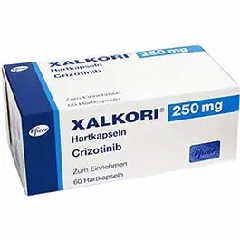
3.Application in the treatment of non-small cell lung cancer: Crizotinib has been widely used in the treatment of non-small cell lung cancer since its approval.Non-small cell lung cancer with ALK or ROS1 gene rearrangement. Multiple clinical trials have shown that crizotinib can significantly improve patients' progression-free survival (PFS) and overall survival (OS). Crizotinib is often used as part of treatment for patients with advanced or metastatic lung cancer, especially those who are ALK- or ROS1-positive. Studies have shown that crizotinib treatment can effectively slow down tumor growth, has fewer side effects than traditional chemotherapy, and significantly improves patients' quality of life.
4.Clinical efficacy: Clinical studies have shown that crizotinib has excellent efficacy in patients with ALK positive non-small cell lung cancer. In a key clinical trial, the objective response rate (ORR) of crizotinib in ALK-positive patients reached 60%–70%, which is much higher than traditional chemotherapy drugs. For ROS1 positive patients, crizotinib also shows good efficacy, and about 50% of patients can achieve partial or complete remission.
Other indications
In addition to treating ALK and ROS1 non-small cell lung cancer, crizotinib can also be used to treat certain rare types of cancer, such as clear cell renal cell carcinoma (RCC). Research is ongoing to further explore crizotinib's therapeutic potential in other types of tumors.
Crizotinib, as a targeted therapy, significantly improves the therapeutic effect of non-small cell lung cancer by targeting the inhibition of ALK and ROS1 proteins, especially in patients with ALK or ROS1 gene rearrangements. Its efficacy has been confirmed through multiple clinical trials and has become one of the standard treatments for these patients.
[ 免责声明 ] 本页面内容来自公开渠道(如FDA官网、Drugs官网、原研药厂官网等),仅供持有医疗专业资质的人员用于医学药学研究参考,不构成任何治疗建议或药品推荐。所涉药品可能未在中国大陆获批上市,不适用于中国境内销售和使用。如需治疗,请咨询正规医疗机构。本站不提供药品销售或代购服务。


