
.jpeg)
The effect of axitinib/axitinib versus sustat
Sutent is the trade name of sunitinib (Sunitinib) marketed in China. Axitinib/Axitinib and sunitinib are both widely used in the treatment of advanced renal cell carcinoma (RCC). As targeted drugs, they each show different efficacy and characteristics in clinical application. Axitinib is a selective small molecule tyrosine kinase inhibitor that mainly acts on the VEGF receptor, which is closely related to tumor angiogenesis, while Sutent is a multi-target tyrosine kinase inhibitor that, in addition to the VEGF receptor, also acts on some other kinases, such as PDGFR and KIT. These different mechanisms of action may lead to differences in therapeutic efficacy, side effects, and patient tolerance.
From an efficacy perspective, multiple clinical studies have shown that axitinib exhibits better therapeutic effects than Sutent in certain circumstances. In an important phase III clinical trial, axitinib showed longer progression-free survival (PFS) in patients previously treated with Sutent. Specifically, the median progression-free survival for axitinib can reach more than 6 months, while the median progression-free survival for Sutent is usually between 4 and 5 months. In addition, the objective response rate (ORR) of axitinib also performed well in some patient groups, indicating its potential in controlling tumors. Therefore, axitinib may be an option worth considering for patients who have progressed on other treatments.
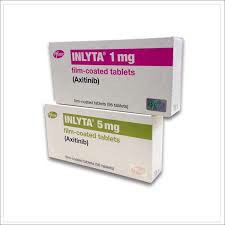
In terms of side effects, axitinib and Sutent exhibit different side effects profiles. The side effects of Sutent are common and diverse, including high blood pressure, fatigue, stomatitis, diarrhea, and rash. Many patients will experience these adverse reactions during the use of Sutent, which affects their quality of life. The side effects of axitinib are relatively concentrated. Although high blood pressure and fatigue can also occur, the overall incidence and severity vary depending on individual differences. Some studies have shown that the side effects of axitinib may be lower than those of Sutent in some patients, especially in terms of flexibility in dose adjustment. Doctors can optimize the medication regimen based on patient tolerance to help mitigate adverse reactions.
In addition, the administration methods of the two are also different, which affects patient compliance. Sutent is usually taken once daily, while axitinib is taken twice daily. Although axitinib is administered relatively frequently, the dose of the drug can be personalized based on patient response, giving patients more flexible treatment options. This flexibility provides patients with greater room for adaptation, especially in response to adverse effects, and can improve patient tolerance by adjusting dosage.
Axitinib also shows greater potential in combination therapy. In recent years, more and more studies have explored the combination of axitinib and immune checkpoint inhibitors, such as with Combination therapy with avelumab or pembrolizumab. This combination may not only enhance anti-tumor effects but also improve patient survival rates. There are relatively few studies on Sutent in this area, and it is mainly used as a monotherapy. This allows axitinib to provide more treatment options in clinical practice.
Reference materials:https://translational-medicine.biomedcentral.com/articles/10.1186/s12967-019-2047-4
[ 免责声明 ] 本页面内容来自公开渠道(如FDA官网、Drugs官网、原研药厂官网等),仅供持有医疗专业资质的人员用于医学药学研究参考,不构成任何治疗建议或药品推荐。所涉药品可能未在中国大陆获批上市,不适用于中国境内销售和使用。如需治疗,请咨询正规医疗机构。本站不提供药品销售或代购服务。


