
.jpeg)
How long does it take for vorasidenib-VORANIGO to take effect and analysis of clinical course of treatment, onset of effect and patient experience
Vorasidenib-VORANIGO is an oral small molecule targeted drug, mainly targeting patients with low-grade gliomas and recurrent gliomas related to IDH1/2 mutations. Its mechanism of action is by inhibiting abnormal IDH enzyme activity and reducing the accumulation of 2-hydroxyglutarate (2-HG) in the tumor microenvironment, thereby slowing down tumor cell proliferation and inducing differentiation. This targeting effect makes vorsidenib an important clinical treatment option for specific patient groups, but the drug's onset of action and duration of treatment vary among individuals.
In clinical trials, vorsidenib usually requires continuous oral administration for weeks to months before initial efficacy is observed. Most studies have shown that patients may show signs of stabilization or slight reduction in tumor volume on imaging around 4 to 8 weeks after taking the drug. For patients with low-grade glioma, the efficacy is usually manifested as stable disease (stable disease), and some patients can experience significant tumor shrinkage after continuous treatment for 3 to 6 months. In terms of treatment course design, vorsidenib is mainly taken orally at a fixed daily dose, and continuous treatment usually takes several months or even more than a year to maintain the effect of inhibiting tumor growth.
In terms of patient experience, oral administration of vorsidenib is relatively convenient and easy to take for long periods of time. However, because the drug's mechanism of action mainly targets tumor cells with abnormal metabolism, its efficacy is often not immediately apparent, and patients may not experience significant improvement in symptoms in the first few weeks. This requires clinicians to fully communicate with patients before taking medication, help patients establish reasonable expectations, and encourage patients to insist on taking medications as prescribed. After continuing to take the medication, some patients reported that as the course of treatment was extended, imaging examinations showed that tumor control was stable and their quality of life and mental state improved.
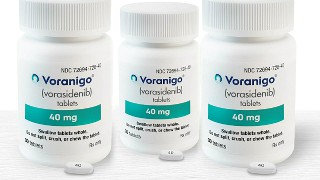
During long-term treatment, vorsidenib is generally well tolerated, but attention should still be paid to possible adverse reactions, such as mild to moderate hematological abnormalities, mild elevation of liver function indicators, fatigue and gastrointestinal discomfort. It is clinically recommended to regularly monitor blood routine, liver and kidney function and tumor markers during the course of treatment, so as to adjust the dosage or extend the interval in a timely manner to ensure maximum efficacy while reducing risks. For patients with a longer course of treatment, doctors may also dynamically adjust the length of the course or combine it with other treatment options based on imaging evaluation results.
The time to onset of response may vary among different patient groups. For example, IDHPatients with a higher mutation load or larger lesions may have a slower tumor response at the beginning of the treatment course; while patients with a lower tumor load or early treatment can usually observe therapeutic effects within a few months. Clinically, individualized assessment is emphasized, and treatment courses and assessment time points are reasonably arranged based on the patient's specific condition, previous treatment experience, and physical condition.
In general, voxanib (VORANIGO), as a targeted drug for patients with IDH mutated glioma, usually takes effect after several weeks to months of continuous medication, and the treatment course is mainly designed for long-term maintenance. Patients need to be patient during use and follow the physician's guidance for regular follow-up and imaging monitoring in order to scientifically evaluate the efficacy and respond to adverse reactions in a timely manner. Through reasonable treatment arrangements and safe management, vorsidenib can provide patients with stable tumor control effects in clinical practice and bring certain improvements in quality of life.
Keyword tags:
Vosidenib, onset of action, clinical course, patient experience,IDHMutant glioma, efficacy evaluation, side effect management, long-term treatment
Reference materials:https://www.drugs.com/monograph/vorasidenib.html
[ 免责声明 ] 本页面内容来自公开渠道(如FDA官网、Drugs官网、原研药厂官网等),仅供持有医疗专业资质的人员用于医学药学研究参考,不构成任何治疗建议或药品推荐。所涉药品可能未在中国大陆获批上市,不适用于中国境内销售和使用。如需治疗,请咨询正规医疗机构。本站不提供药品销售或代购服务。


