
.jpeg)
STOMP trial analysis reveals the immunomodulatory effects of selinezo/silvio in RRMM
Relapsed/refractory multiple myeloma( Analysis of retrospective post-hoc examination of pan>RRMM patient samples showed that selinexor-based regimens positively modulated the T-cell compartment in the bone marrow of responding patients. The aims of this trial are to identify biomarkers predictive of response to selinesol-based regimens and to determine the impact of these treatments on the bone marrow microenvironment, specifically on T cell activation and adaptation.
In post-treatment samples from patients who responded to treatment (reached a partial response or better), CD3-positive T cells showed significant upregulation of proteins related to T cell activation, proliferation, survival and effector function. Key upregulated markers include: epidermal growth factor receptor (EGFR), CD127 (IL-7 receptor alpha chain), granzyme B and granzyme A, phosphorylated ERK1/2 (pERK1/2), STING, CD14 type, CD44 cells, phosphorylated AKT1 (pAKT1).
A key observation is the lack of induction of inhibitory immune checkpoint molecules on CD3-positive T cells after selinesol-based treatment. This applies to samples taken during response and, importantly, to samples taken at disease progression. This suggests that the development of resistance to selinesol may not be mediated by T cell exhaustion. The study confirmed that there was no significant increase in the following markers: PD-, cytotoxic T-lymphocyte-associated protein 4 (CTLA4), lymphocyte activation 3 molecule (LAG3), T-cell immunoglobulin mucin family member 3 (TIM-3), forkhead box P3 gene (FOXP3), type V immune regulatory receptor (VISTA).
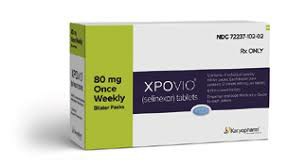
Interestingly, the co-inhibitory moleculeTIM-3 was upregulated in samples from patients who responded to treatment, specifically in the seliniso plus pomalidomide (Pomalyst) plus dexamethasone (SPd) group (n=3). However, its expression was positively correlated with the effector molecule granzyme B and was not associated with a shorter time to disease progression. This suggests that TIM-3 may have a context-dependent costimulatory function or reflect a transiently activated T cell state rather than terminal exhaustion.
The study identified several proteins whose baseline expression levels in myeloma cells orT cells were associated with patient prognosis. Analysis of CD138-positive myeloma cells from pretreatment samples revealed a link between proliferative signaling and therapeutic efficacy.
PhosphorylationMEK1 (pMEK1) Phosphorylation of AKT1 (pAKT1) is associated with poor progression-free survival (PFS). Proapoptotic BAD protein was associated with improved PFS, but this was not statistically significant. Granzyme A is associated with poor PFS. Patients with higher baseline CD45-pan-AKT-STING expression had improved PFS. Patients with higher baseline BAD-Ki-67 cleaved Caspase 9 phosphorylated p90 RSK had poorer PFS.
By comparing protein expression of CD138-positive myeloma cells in pretreatment sampleswith protein expression at disease progression, the study identified potential mechanisms of acquired resistance. The DNA damage repair protein PARP1 is significantly upregulated in myeloma cells from patients who develop resistance to selinexole. High PARP1 expression is independently associated with poor prognosis in MM. Drug-resistant cells also showed downregulation of the anti-apoptotic protein BCL-2 and the immunogenic protein HLA-DR. These patients participated in 3 parts of the STOMP trial:
No.Group 1 (SPd): Selinisol+pomalidomide+dexamethasone ((n=3))
No.Group 5 (SDd): seliniso + daratumumab (Darzalex) + dexamethasone (n=9)
No.Group 6 (SKd): SEL+carfilzomib (Kyprolis)+dexamethasone (n=5)
This study usedNanoString GeoMx digital spatial analysis to conduct spatially resolved quantitative analysis of 79 immuno-oncology-related proteins. The analysis was performed on specific cell populations, primarily CD138-positive myeloma cells and CD3-positive T cells isolated from archived patient bone marrow biopsies collected before and after treatment.
The finding that PARP1 is upregulated in drug-resistant myeloma cells suggests that combining selinesol with a PARP1 inhibitor may be a viable strategy to prolong treatment effects.
The study notes that concepts arising from this research are already being explored. Retrospective studies have shown that patients treated with selinesol-based regimens before chimeric antigen receptor (CAR) T-cell apheresis or after CAR T-cell relapse had good outcomes. Clinical trials are ongoing or being initiated to study selinesol in combination with next-generation immunomodulatory drugs and bispecific antibodies.
This research may be based onThe clinical use of [Selinesol]’s regimen provides some theoretical basis as a bridging therapy or maintenance therapy for T cell-involved therapy, such as CAR T cell therapy or bispecific antibody therapy.
Reference materials: UpdatedNovember 25, 2025, https://www.targetedonc.com/view/stomp-trial-analysis-reveals-immunomodulatory-effects-of-selinexor-in-rrmm
[ 免责声明 ] 本页面内容来自公开渠道(如FDA官网、Drugs官网、原研药厂官网等),仅供持有医疗专业资质的人员用于医学药学研究参考,不构成任何治疗建议或药品推荐。所涉药品可能未在中国大陆获批上市,不适用于中国境内销售和使用。如需治疗,请咨询正规医疗机构。本站不提供药品销售或代购服务。


