
.jpeg)
Are cemiplimab and cemiplimab the same drug and the reason for the difference in names?
Cemiplimab and cemiplimab are actually the same drug, but the expression between the Chinese translation and the English generic name (INN) is different. The English name cemiplimab is its common name and is used in global medical literature, drug instructions and regulatory documents; while "cemiplimab" is a Chinese translation. According to my country's drug naming habits, the antibody drug suffix "-mab" is translated as "monoclonal antibody" and transliterated according to pronunciation rules, so there is no essential difference between the two. No matter in terms of pharmacological effects, indications, dosage forms, manufacturers or clinical use, they are completely consistent.
The main reason for the name differences is the difference between the international naming system and the Chinese drug name translation system. Taking cemiplimab as an example, the international nonproprietary name is formulated by the World Health Organization (WHO) based on the antibody structure, target and source rules; while the Chinese Pharmacopoeia Commission and the National Food and Drug Administration usually present it in transliteration, with "cimipril" corresponding to the pronunciation and "monoclonal" monoclonal antibody, thus forming the standard Chinese name of “cimipilimab”. This difference is similar to drugs such as Pembrolizumab and Nivolumab - the Chinese and English forms are different, but the drugs are exactly the same.
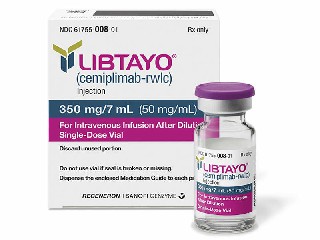
In clinical treatment, whether the doctor writes "Cemiplimab Injection" in the prescription, or cemiplimab-rwlc, Libtayo (its trade name) mentioned in the literature, all point to the same PD-1 Antibodies. It is mainly used to treat metastatic or locally advanced cutaneous squamous cell carcinoma, as well as some patients with non-small cell lung cancer and basal cell carcinoma. Since the drug is currently an imported original drug, it often appears in academic literature under the English name cemiplimab in the Chinese market, while "cemiplimab" is more commonly used in clinical system communication with patients.
From the perspective of patient medication, there is no need to worry that different names will affect medication safety. As long as you confirm that the manufacturer (such as Regeneron/Sanofi) and the specifications (such as 350mg/7mL) are consistent, you can ensure that you are buying the same drug. When consulting doctors, consulting guides or purchasing channels, if you encounter cemiplimab, cemiplimab-rwlc or "cemiplimab", they can all be regarded as the same antibody drug. Understanding this nomenclature difference can help avoid misunderstandings due to different translations or versions, and can also allow patients to obtain information more accurately when consulting international materials.
Keyword tags:
Cemiplimab, drug name, Cemiplimab, Chinese and English differences, the same drug, immunotherapy, PD-1Inhibitor reference: https://www.ema.europa.eu/en/medicines/human/EPAR/libtayo
[ 免责声明 ] 本页面内容来自公开渠道(如FDA官网、Drugs官网、原研药厂官网等),仅供持有医疗专业资质的人员用于医学药学研究参考,不构成任何治疗建议或药品推荐。所涉药品可能未在中国大陆获批上市,不适用于中国境内销售和使用。如需治疗,请咨询正规医疗机构。本站不提供药品销售或代购服务。


