
.jpeg)
Summary and analysis of the efficacy and clinical research of Zongatinib (Zongatinib) in patients with HER2 exon20 mutations
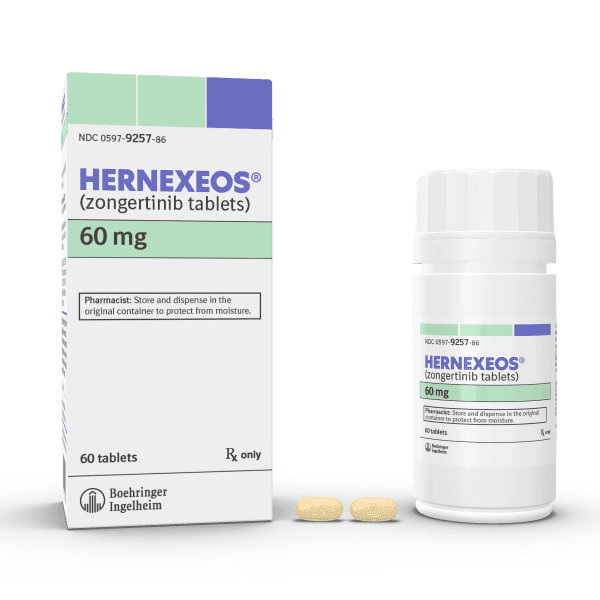
Zongertinib (zongertinib) is an oral, selective HER2 tyrosine kinase inhibitor (TKI) developed in recent years for the treatment of HER2 exon 20 Exon 20 ins HER2 mutations are relatively rare in NSCLC accounting for approximately 2% –4% of all cases, a subtype that has historically had a poor prognosis due to a lack of effective targeted therapies. Zongertinib is designed for HER2 mutants, especially for exon 20 insertion and other refractory mutations, which is highly selective, thereby achieving strong inhibitory effect and reducing the effect on EGFR Toxicity caused by non-specific inhibition of wild type.
In clinical studies, the Beamion LUNG‑1 trial (including the Ib phase cohort 1 data) is an important source of efficacy evaluation of zongatinib. The study included patients with HER2 mutated NSCLC who had received prior systemic therapy and who were treated with once-daily 120 mg Zongatinib, confirmed by independent evaluation. The objective response rate (ORR) reached approximately 71%, and the disease control rate (DCR) was as high as 96% or more, showing a significant tumor shrinkage response. The median duration of response (DOR) was approximately 14.1 months, and the median progression-free survival (PFS) was approximately 12.4months, this efficacy data is of great clinical significance for patients with this refractory subtype.
Notably, zongertinib also showed potential activity in patients with brain metastases. Some data point out that in the cohort with evaluable brain metastases, the objective brain response rate has also reached around 40% , and the disease control rate has exceeded 80%, suggesting that it can penetrate the blood-brain barrier to a certain extent and has a therapeutic effect on brain lesions. This feature is particularly important for HER2 mutated NSCLC patients, because this subtype has a higher risk of brain metastasis.
From the overall safety perspective, the safety of zongatinib is one of its advantages. Most adverse reactions are mild to moderate, including diarrhea, rash, elevated liver enzymes, etc. The incidence of high-grade adverse events is low, and no obvious drug-related interstitial lung disease (ILD) was found in the study. Compared with earlier pan-HER2/EGFR inhibitors, their selectivity for wild-type EGFR is higher, so the incidence of common EGFR inhibition-related toxicities (such as severe rash and diarrhea) is relatively low, making long-term oral treatment more tolerable.
In general, zongertinib (zongertinib) has shown strong efficacy and manageable safety in patients with HER2 exon 20 mutations, significantly improving the treatment prospects for patients with this difficult-to-treat lung cancer subtype. Its high ORR, durable remission and good brain activity make it a HER2 targeted drug with great potential for clinical development. With further data accumulation and global approval, zongertinib is expected to become a standard treatment option in more regions and bring substantial survival benefits to patients with advanced NSCLC carrying HER2 mutations.
Keyword tags:
Zongertinib,HER2 exon20Mutation, efficacy, clinical trials, brain metastasis, safety, objective response rate
Reference materials:https://pubmed.ncbi.nlm.nih.gov/40293180/
[ 免责声明 ] 本页面内容来自公开渠道(如FDA官网、Drugs官网、原研药厂官网等),仅供持有医疗专业资质的人员用于医学药学研究参考,不构成任何治疗建议或药品推荐。所涉药品可能未在中国大陆获批上市,不适用于中国境内销售和使用。如需治疗,请咨询正规医疗机构。本站不提供药品销售或代购服务。


