
.jpeg)
What is the mechanism of action of bosutinib/bosutinib?
Bosutinib is an oral small molecule tyrosine kinase inhibitor that is mainly used for Philadelphia chromosome-positive chronic myelogenous leukemia (Ph+ CML) in the field of molecular targeted therapy. Its mechanism of action is not to inhibit a single target, but to inhibit the proliferation and survival of leukemia cells through the regulation of multiple abnormal signaling pathways, thereby achieving disease control. The following is a systematic analysis of its mechanism of action from multiple medical perspectives.
1. The core target isBCR-ABL fusion protein kinase activity: The core mechanism of action of bosutinib is to inhibit BCR-ABL tyrosine kinase. BCR-ABL is an abnormal fusion protein formed by the translocation of chromosomes 9 and 22. It has continuously activated kinase activity and is a key molecular driver of the occurrence and progression of Ph+ CML. Bosutinib binds to the BCR-ABL kinase domain and blocks its ATP binding site, thereby inhibiting abnormal downstream signaling and causing leukemia cells to lose their source of sustained proliferation signals.
2. Characteristics of selective inhibition ofABL kinase: Unlike some early kinase inhibitors, the molecular structure design of bosutinib is more biased toward selective inhibition of ABL kinase, and its impact on some unrelated kinases is relatively limited. This selective feature helps to reduce interference with normal hematopoietic cell signaling pathways to a certain extent, allowing it to have a relatively controllable safety profile in long-term treatment.
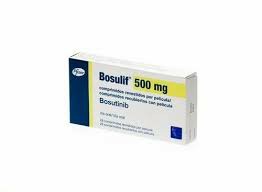
3. Simultaneously inhibits SRC family kinase signaling pathway: In addition to BCR-ABL, bosutinib can also inhibit SRC family kinases (such as SRC, LYN, HCK, etc.). SRC family kinases play an important role in leukemia cell adhesion, migration and dependence on the microenvironment. By inhibiting SRC-related signaling, bosutinib not only interferes with the growth of tumor cells themselves, but also weakens their survival advantage in the bone marrow microenvironment, thereby enhancing the overall anti-leukemia effect.
4. Indirect regulation of multiple downstream signaling pathways: Inhibition of BCR-ABL and SRC kinase will further affect multiple key downstream signaling pathways, including the PI3K/AKT pathway, MAPK/ERK pathway and STAT signaling pathway. These pathways have central roles in cell cycle regulation, anti-apoptosis, and metabolic regulation. Bosutinib uses multi-level signal blocking to gradually cause leukemia cells to enter a state of restricted proliferation or even programmed death.
5. Characteristics of intervention in resistance-related mechanisms: Bosutinib can still play a therapeutic role in some patients who are resistant or intolerant to previous tyrosine kinase inhibitors. This is related to its ability to bind different kinase conformations and its inhibition of the SRC pathway. Some atypical resistance mechanisms are not entirely dependent on a single BCR-ABL mutation, but are related to the activation of bypass signaling. The multi-target inhibitory properties of bosutinib have certain advantages in this context.
6. YesExplanation of the limitation of the effect of T315I mutation: From the perspective of molecular mechanism, bosutinib has limited ability to inhibit certain specific mutation sites of BCR-ABL, especially the T315I mutation. This feature also explains the need for mutation analysis in clinical use to assist in determining whether it is suitable for continued use or replacement with other targeted drugs. This “boundary” at the mechanism level reflects the importance of precise medication.
In the chronic phaseIn the chronic phase of CML, bosutinib mainly achieves long-term disease control by inhibiting abnormal proliferation signals; while in the accelerated phase or blast phase, leukemia cells are often accompanied by more molecular abnormalities, and its multi-target inhibitory properties can delay disease progression to a certain extent, but treatment strategies usually require more comprehensive medical evaluation.
Keyword tags: Bosutinib mechanism of action,Bosutinib pharmacological mechanism, bosutinib target analysis, BCR-ABL inhibitor, Ph+ chronic myelogenous leukemia, tyrosine kinase inhibitor, Bosutinib resistance mechanism, SRC kinase inhibition, CML targeted therapy
Reference materials:https://www.medicines.org.uk/emc/product/3147/smpc
[ 免责声明 ] 本页面内容来自公开渠道(如FDA官网、Drugs官网、原研药厂官网等),仅供持有医疗专业资质的人员用于医学药学研究参考,不构成任何治疗建议或药品推荐。所涉药品可能未在中国大陆获批上市,不适用于中国境内销售和使用。如需治疗,请咨询正规医疗机构。本站不提供药品销售或代购服务。


