
.jpeg)
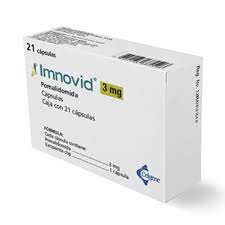
Pomalidomide/octuzumab/zanubrutinib/venetoclax quadruple therapy is effective in high-risk MCL
High-riskMCL lacks effective treatment options and has a poor prognosis. [National Comprehensive Cancer Network] guidelines recommend clinical trials as the first choice [for treatment of these patients]. Combination regimens or multiple targeted drugs have become common clinical options, but standardized regimens have not yet been established.
What are the key design features of prospective studies?
The study enrolled adult patients with confirmed MCL and adequate organ function. Patients also needed to have high-risk disease and at least 1 of the following risk factors: embryoid variant, TP53 mutation, or TP53 deletion. All patients received octuzumab 1000 mg on day 1 in combination with zanubrutinib 160 mg twice daily, pomalidomide 4 mg on days 1 to 14, and venetoclax 200 mg for a total of six 28-day cycles. If the regimen is effective, patients will receive 1000 mg of octuzumab plus 160 mg of zanubrutinib on Day 1 every 3 months twice daily for For 2 years, pomalidomide is 4mg, and venetoclax is 200mg, once every 28 days for 1 year as maintenance treatment.
The primary endpoint was based onLugano 2004 standard ORR. Minimal residual disease (MRD) status was assessed by next-generation sequencing (NGS) in peripheral blood. At baseline, the median age of all patients enrolled in the study was 61 years (range 44-78). Most patients were male (80.0%), had high/intermediate-high risk disease according to MCL International Prognostic Index score (80.0%), had blastocystic or polymorphic disease (73.3%), Ki67 score of at least 50% (66.7%), TP53 mutation or deletion (66.7%), TP53 aberration combined with high-risk gene mutation (53.3%). The study included patients with untreated (n=12) and relapsed/refractory MCL (n=3). Patients with relapsed/refractory disease had received a median of 1 (range 1-4) before treatment.
What are the additional effectiveness and safety data?
Other findings from the study showed that at the end of course3, the ORR and CR rates were 100.0% and 80.0%, respectively. Of the 12 patients who underwent MRD testing after 6 treatment cycles, 100% achieved an MRD status of undetectable by NGS. In terms of safety, the most common grade 3 to 4 adverse reactions included neutropenia (60.0%), thrombocytopenia (20.0%) and infection (13.3%).
The findings provide preliminary evidence that the quadruple drug combination of otuzumab, zanubrutinib plus pomalidomide and venetoclax is an effective regimen for high-risk MCL and should be evaluated in prospective randomized controlled trials.
Reference: Updated on January 7, 2026, https://www.onclive.com/view/obinutuzumab-zanubrutinib-pomalidomide-venetoclax-quadruplet-is-effective-in-high-risk-mcl
[ 免责声明 ] 本页面内容来自公开渠道(如FDA官网、Drugs官网、原研药厂官网等),仅供持有医疗专业资质的人员用于医学药学研究参考,不构成任何治疗建议或药品推荐。所涉药品可能未在中国大陆获批上市,不适用于中国境内销售和使用。如需治疗,请咨询正规医疗机构。本站不提供药品销售或代购服务。


