
.jpeg)
Detailed instructions on the usage and dosage of Tarlatamab-Imdelltra and the clinical medication regimens for different patients.
Tarlatamab-Imdelltrais a novel bispecificT cell-redirecting antibody (BiTEBiTE pan>), mainly used to treat small cell lung cancer (SCLC) and other solid tumors that partially express DLL3. Its mechanism of action is to simultaneously combine the CD3 molecules of T cells with the DLL3 antigen on the surface of tumor cells, relocating T cells to the tumor site, thereby enhancing the killing ability of tumor cells. The drug is usually administered by intravenous infusion in clinical practice, and the dosage and dosage regimen need to be individually adjusted based on the patient's weight, tumor type, and previous treatment to maximize efficacy and reduce the risk of adverse reactions.
In standard usage, the initial dose of talatumumab is usually an intravenous infusion once a week, and the infusion time can be adjusted based on drug concentration and tolerability. Slow infusion is recommended during initial administration to reduce adverse reactions caused by cytokine release syndrome (CRS). In clinical studies, patients will be closely monitored in hospitals or specialized centers when receiving the first dose, including vital signs, blood routine, and liver and kidney function, so that potential adverse events can be dealt with in a timely manner. Subsequently, if tolerated well, administration can be continued according to a fixed cycle.
There are certain differences in clinical protocols for different patient groups. For patients with recurrent small cell lung cancer who have previously received chemotherapy or radiotherapy, talatumumab is usually used as a second-line or third-line treatment drug, and the dose can be adjusted appropriately to balance efficacy and tolerability; for patients with weak constitution or combined with underlying diseases, lowering the initial dose or extending the dosing interval can be considered to reduce the incidence of immune-related adverse events. At the same time, for elderly patients or patients with mild to moderate renal insufficiency, clinical dosage adjustment is generally not required, but monitoring needs to be strengthened to ensure safety.
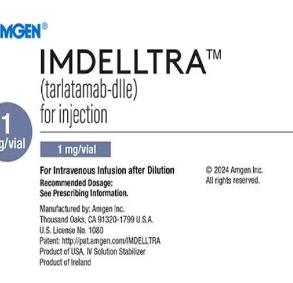
During clinical treatment, the dosage regimen of talatumumab needs to be dynamically adjusted based on tumor burden and patient response. If the patient experiences obvious adverse reactions during the early course of treatment, such as fever, chills, hypotension or hematological abnormalities, measures such as dose reduction, delayed infusion or symptomatic treatment should be taken promptly. For patients with obvious efficacy and good tolerance, continued maintenance treatment can be considered to prolong progression-free survival (PFS) and improve quality of life. In addition, clinical studies have shown that when combined with chemotherapy or other immunotherapy regimens, it is necessary to comprehensively assess the cumulative risk of toxic and side effects and formulate an individualized combination regimen to improve the overall treatment effect.
The administration and treatment course management of talatumumab emphasizes the principle of individualization and needs to be accurately adjusted based on the patient's baseline health status, tumor molecular characteristics, and previous treatment history. During use, patients should regularly review hematological indicators, liver and kidney function and imaging evaluation, and optimize drug dosage if necessary. At the same time, medical staff should provide full education to patients, including identification of adverse reactions, medication precautions and emergency treatment measures, to ensure safe and effective completion of the treatment cycle. Through a combination of standardized dosing procedures and individualized adjustments, the anti-tumor effect of talatumumab can be maximized clinically, providing new treatment options for patients with small cell lung cancer.
Keyword tags: talatumumab, Imdelltra, usage and dosage, small cell lung cancer, BiTEantibody, DLL3, CD3, infusion regimen, dose adjustment.
Reference materials:https://pubmed.ncbi.nlm.nih.gov/40454646/
[ 免责声明 ] 本页面内容来自公开渠道(如FDA官网、Drugs官网、原研药厂官网等),仅供持有医疗专业资质的人员用于医学药学研究参考,不构成任何治疗建议或药品推荐。所涉药品可能未在中国大陆获批上市,不适用于中国境内销售和使用。如需治疗,请咨询正规医疗机构。本站不提供药品销售或代购服务。


