
.jpeg)
tarlatamab (Imdelltra) drug information, including indications, dosage and clinical research analysis
Tarlatamab‑Imdelltra Drug Information is a novel bispecific Tcell engager, BiTE® (), developed by Amgen (Amgen), is used to activate the patient's own T cells to attack tumor cells. It has a binding arm at each end: one end binds to the delta-like ligand3 (DLL3) that is highly expressed on the surface of tumor cells, and the other end binds to T
In terms of indications, talatumumab (trade name: Imdelltra®) has been approved by the U.S. Food and Drug Administration (FDA) for the treatment of adult patients with extensive-stage small cell lung cancer (ES-SCLC) whose disease has progressed after platinum-based chemotherapy or chemotherapy. This indication received accelerated approval based on overall response rate and duration of response in pivotal clinical trials and is for refractory cases after failure of conventional treatments. In 202511month, FDA also converted this indication from accelerated approval to formal approval based on the results of the III confirmatory trial, showing its efficacy as a standard treatment.
In terms of usage, dosage and dosage regimen, Imdelltra is administered by intravenous infusion. According to the FDA instructions, the recommended dosage regimen is: 1 day 1 of the first treatment cycle 1 mgIntravenous infusion (approximately 1 hour), followed by cycle 1Give 10 mg on the 8 and 15 days respectively, and then continue every two weeks for 10 mgUntil disease progression or intolerable toxicity occurs. The first treatment cycle is often accompanied by step dosing (step‑up dosing) to reduce the risk of cytokine release syndrome (CRS) and require monitoring of the patient in an environment with appropriate medical support for more than 24 hours at the beginning of cycle 1. The total course of treatment usually does not need to be fixed, but disease progression and tolerability should be assessed before the start of each cycle.
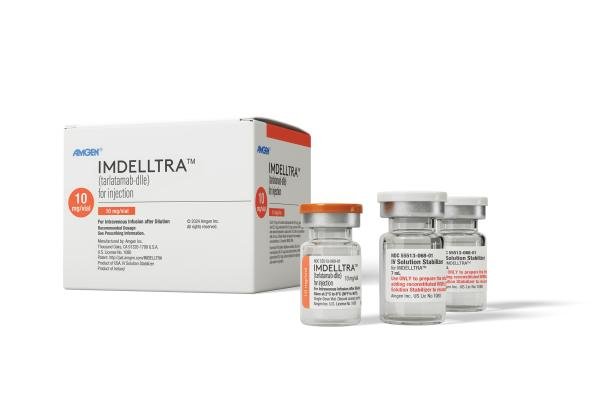
In terms of clinical research and efficacy evaluation, early stage I and II studies (such as DeLLphi‑301 Study) showed that talatumumab has encouraging anti-tumor activity in previously treated ESES‑SCLC patients, including higher objective response rate, longer duration of response, and overall survival benefit. In the follow-up phase III confirmatory trial DeLLphi‑304, Imdelltra significantly prolonged median overall survival (OS) compared with standard chemotherapy. ), and significantly reduces the risk of death (such as extending the median OS to approximately 13.6 months), further consolidating its therapeutic value in refractory ES‑SCLC patients. Real-world studies have also shown that this dual-antibody therapy maintains strong anti-tumor activity in pre-treated severely ill people, but it should be noted that immune-related adverse events such as **CRSand immune effector cell-associated neurotoxic syndrome (ICANS)** are common in the initial treatment cycle and require close monitoring and early intervention.
In terms of safety and precautions, the side effects of talatumumab are mainly related to immune activation. The most common ones include cytokine release syndrome (CRS), fatigue, fever, abnormal taste, decreased appetite, muscle pain and constipation. CRS is a characteristic risk of this type of immunotherapy. It usually occurs within hours after infusion and requires clinical monitoring and symptomatic treatment. At the same time, including blood cell reduction, infection risk, liver function damage, etc., also need to be regularly evaluated. The monitoring plan recommends conducting routine blood tests, liver and kidney function tests before each cycle of infusion, and more frequent monitoring during the early stages of treatment and under special clinical conditions. In clinical practice, we should also remain vigilant about possible neurotoxicity and suspend medication and provide supportive care when necessary.
Overall, talatumumab (Imdelltra), as a bispecific T cell engager targeting DLL3, provides a new immunotherapy option for patients with advanced extensive-stage small cell lung cancer, especially in the context of failure of platinum-based chemotherapy. Validated in early clinical trials and large phase III confirmatory trials, it not only improves overall survival and response rates, but also marks a new treatment paradigm for this aggressive tumor. Clinical use needs to be combined with strict dosing regimens and monitoring strategies to optimize efficacy and reduce immune-related risks.
Keyword tags: talatumumab, bispecific antibody, small cell lung cancer, DLL3targeting, immunotherapy
Reference materials:https://pubmed.ncbi.nlm.nih.gov/40454646/
[ 免责声明 ] 本页面内容来自公开渠道(如FDA官网、Drugs官网、原研药厂官网等),仅供持有医疗专业资质的人员用于医学药学研究参考,不构成任何治疗建议或药品推荐。所涉药品可能未在中国大陆获批上市,不适用于中国境内销售和使用。如需治疗,请咨询正规医疗机构。本站不提供药品销售或代购服务。


